

Skincare Routine for Dull Skin: A Gentle, Effective Guide
What if brighter-looking skin starts with doing less, rather than adding another active? A thoughtful skincare routine for dull skin begins by considering what may be behind a lacklustre appearance, such as surface dryness, build-up or environmental exposure.
If your complexion looks flat, it can be hard to tell whether it needs more moisture, gentle exfoliation or simply a steadier routine. When every new product promises radiance, layering several active products can feel risky, especially if your skin is already dry or easily irritated. A calm, consistent approach gives you space to notice how your skin responds without overwhelming it.
This guide explains common contributors to dull-looking skin and sets out manageable morning and evening steps in the order to use them. You’ll learn which product types to prioritise, how to introduce changes thoughtfully and why daily sun protection belongs in a considered morning routine. The aim isn’t an overnight transformation, but a comfortable ritual you can maintain while giving your skin time to respond.
Key Takeaways
- Dullness describes an appearance, not a skin type. Considering possible contributors can help you make thoughtful product choices.
- A skincare routine for dull skin works best when its core steps suit your skin’s comfort and needs.
- Learn how to order simple morning and evening routines, with exfoliation as an optional step.
- Find out how to introduce targeted products gradually instead of layering several new active products at once.
- Explore an illustrative routine featuring Cactus Skincare products, then give consistent care time to settle in.
What Does Dull Skin Look Like, and What Might Be Behind It?
Dullness describes how skin looks, not a skin type or a diagnosis. Dull-looking skin appears less radiant or lively than usual, sometimes with uneven tone, a rough-looking surface or visible dryness. Your complexion may seem flat, feel less smooth or look patchy under certain light. Any one of these signs alone doesn’t reveal the cause.
Several factors can contribute at once. A dry surface, accumulated skin cells and environmental exposure may all affect how your complexion looks. Age-related changes can also play a part, but they aren’t the only explanation. A useful skincare routine for dull skin responds to your skin’s comfort and visible needs rather than assuming every lacklustre complexion needs the same product.
Dull-looking skin is a description of appearance, not a medically diagnosed condition or a diagnosis of what is causing the change. If a change is sudden, persistent or concerning, seek professional assessment rather than trying to identify its cause from appearance alone.
What can make a complexion look dull?
Surface dryness or dehydration can leave skin feeling tight or looking less smooth, which may affect its natural-looking luminosity. Accumulated surface cells can also leave skin looking rough or uneven. A less even surface may reflect light differently, but roughness doesn’t automatically mean exfoliation is needed. These signs don’t confirm a single cause.
Environmental exposure, including sun exposure, may contribute to changes in tone and texture over time. Age-related changes may also affect how skin looks and feels. These are possibilities, not certainties. Uneven pigmentation is a distinct feature to consider: information about skin whitening discusses approaches that alter pigmentation, but a lack of radiance alone doesn’t mean skin needs to be lightened. A brighter-looking complexion and changing your skin’s natural colour are not the same goal.
Dullness or dryness: how are they different?
Dullness describes a lack of visible radiance. Dryness is more likely to involve sensations or surface signs such as tightness, flaking or rough-feeling texture. They can occur together, so skin may look flat and feel uncomfortable, but one doesn’t automatically indicate the other.
Notice what you can observe without trying to diagnose yourself: does your skin mainly look less luminous, or does it also feel tight and appear flaky? These clues can help you choose a gentler starting point, but they don’t establish why your complexion has changed. Avoid treating every dull appearance as a call for stronger products. The cause may not be obvious from a mirror.
How Hydration, Gentle Exfoliation and Protection Support Brighter-Looking Skin
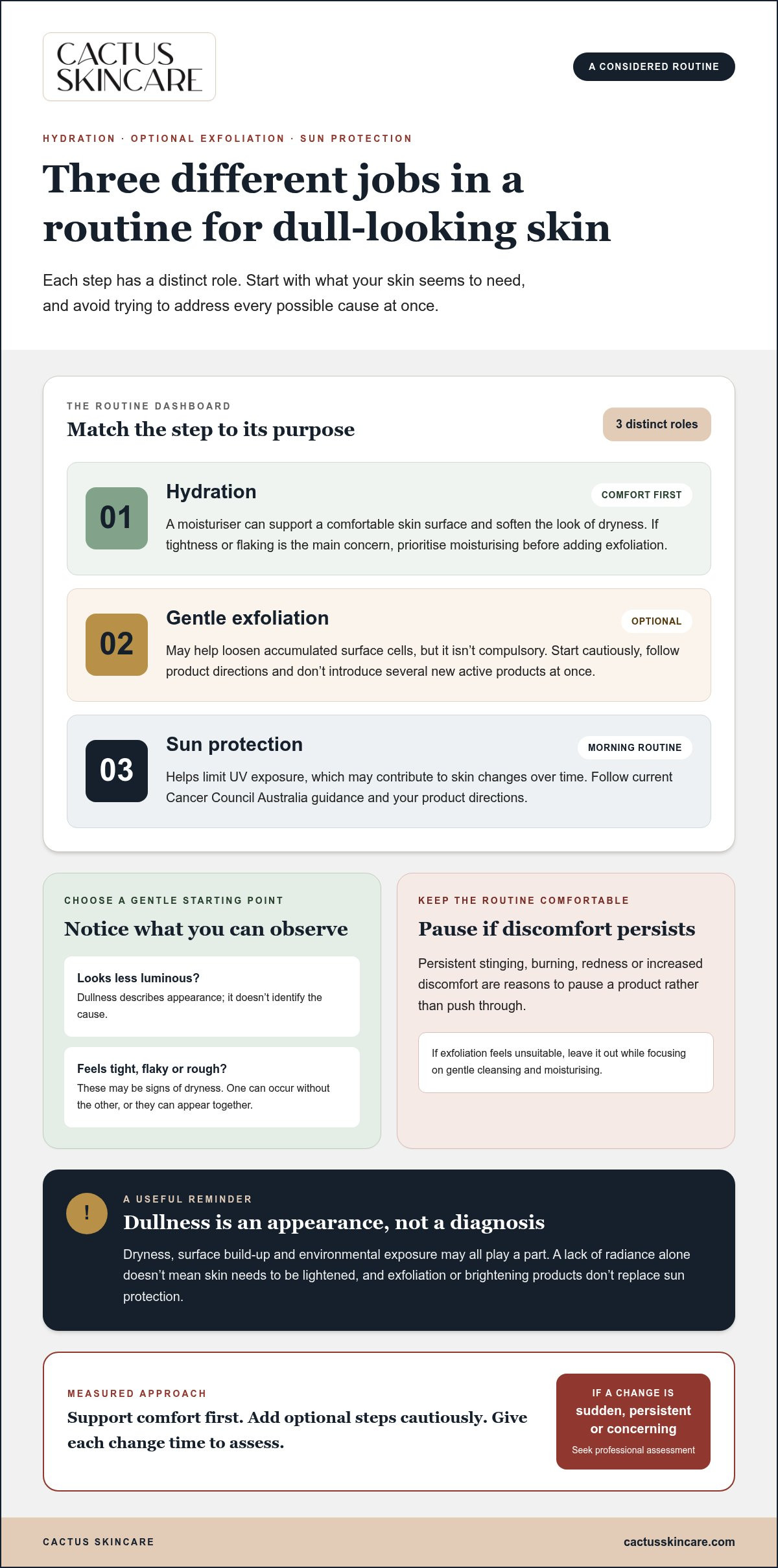
A considered routine doesn’t need to target every possible cause at once. Hydration can support comfort, exfoliation may help with surface build-up, and sun protection helps limit UV exposure. Each has a different role, and none is a universal answer to dull-looking skin. The Galderma survey on skin quality concerns reflects that skin quality can be a meaningful concern. A measured approach keeps your routine focused on your own skin’s needs.
Why hydration belongs in a dull-skin routine
Skin can lose water from its outer layers, while surface dryness may leave it feeling tight or looking rough. These signs can make the complexion appear less smooth and luminous, but they aren’t the same as a lack of natural radiance. Hydration addresses comfort and the appearance of dryness. It doesn’t necessarily resolve uneven tone or every other reason skin might look lacklustre.
A moisturiser can help support a comfortable skin surface and soften the look of dryness. Choose a texture that feels suitable for your skin and apply it according to its directions. If tightness or flaking is your main concern, prioritising moisturiser may make more sense than immediately adding exfoliation. Drinking enough water supports general wellbeing, but drinking extra water shouldn’t be treated as a guaranteed cosmetic fix.
Where exfoliation and sun protection fit
Exfoliation may help loosen accumulated surface cells, but it’s optional, not a compulsory step for every skin type. More isn’t better: frequent or harsh exfoliation can leave skin uncomfortable and make a routine harder to maintain. Start cautiously, follow the product directions and avoid introducing several new active products at the same time.
Pay attention to how your skin responds. If a product causes persistent stinging, burning, redness or increased discomfort, pause it rather than pushing through. A routine should feel sustainable, not like a test of endurance. If you’re unsure whether exfoliation suits your skin, leaving it out while you focus on gentle cleansing and moisturising is a reasonable choice.
Sun protection has a distinct role: it helps limit UV exposure, which can contribute to skin changes over time. For practical advice suited to Australian conditions, follow current guidance from Cancer Council Australia and the directions on your sun-protection product. Don’t rely on exfoliation or brightening products as a substitute for protection.
Dullness can have several contributors, so the best routine response depends on what your skin seems to need, not on one universal brightening step. Keep your skincare routine for dull skin simple: support comfort first, consider optional steps carefully and give each change time to assess. If you’re comparing moisturising options, explore hydrating skincare options as one place to begin.
Which Routine Steps and Product Types Should You Prioritise?
A useful routine is built around a few reliable steps, not a crowded shelf. Start with products that support cleansing and skin comfort, then include daytime sun protection. Consider whether an optional serum, facial oil or exfoliating product has a clear place in your routine. The right choice depends on your individual skin needs and the directions for each product.
Foundational steps versus optional brightening products
Think of foundational steps as the framework and targeted products as additions. A cleanser removes daily build-up, a moisturiser supports a comfortable-feeling surface, and daytime sun protection helps limit UV exposure. A serum or facial oil may suit particular preferences, but neither is essential for everyone. Exfoliation is optional, too.
| Routine step | Purpose | Priority | Gentle-use note |
|---|---|---|---|
| Cleanser | Cleanses the skin before the rest of your routine. | Foundation | Choose one that leaves skin comfortable, not stripped or tight. |
| Moisturiser | Supports skin comfort and helps reduce the look of surface dryness. | Foundation, especially if skin feels dry | Select a comfortable texture and follow its directions. |
| Daytime sun protection | Helps limit UV exposure during the day. | Foundation for daytime care | Follow current Australian guidance and the product directions. |
| Serum | An optional layer for a specific routine preference or concern. | Optional | Introduce it on its own and use as directed. |
| Facial oil | An optional product that can suit some routines and preferences. | Optional | Consider how it feels on your skin; it needn’t replace moisturiser. |
| Exfoliating product | May help with surface build-up. | Optional | Start cautiously, follow directions and pause if irritation develops. |
A simple, comfortable routine is easier to follow consistently. If you’re new to skincare, the foundational steps are enough to begin. You don’t need to add a serum, facial oil and exfoliant together to create a considered routine.
How to choose without overloading your routine
First, identify what you want to address. For example, if your skin feels tight, moisturiser may be a more useful next step than an exfoliant. Add one new product at a time and keep your other steps steady so you can notice how your skin responds. Use each product according to its directions, including the advised amount, placement and frequency.
If discomfort develops, pause the new product rather than adding another formula to counter it. A measured skincare routine for dull skin leaves room to adjust based on comfort, without pressure to use every product type. If you’re considering an oil as an optional layer, this facial oil for glowing skin guide can help you think through what may suit your routine.
How to Build a Morning and Evening Routine for Dull-Looking Skin
Order can make a routine easier to follow, but more steps don’t automatically mean better care. Begin with a small sequence, then adapt it to your skin’s comfort and each product’s directions. This practical skincare routine for dull skin keeps daytime protection distinct from evening cleansing and leaves optional steps flexible.
A simple morning routine
In the morning, cleanse only as much as your skin needs. If a cleanser leaves your skin feeling dry or tight, a water rinse may feel more comfortable. Keep the order simple:
- Cleanse or rinse. Use a gentle cleanser, or rinse with water according to your skin and preference.
- Apply an optional serum. If you use one, apply it after cleansing and follow its directions for amount and placement. Skip it if you’re keeping the routine minimal.
- Moisturise if needed. Apply a moisturiser that feels comfortable on your skin. Follow the product directions, especially if you’re layering it with other leave-on products.
- Finish with sun protection. Use sun protection as directed and follow current Cancer Council Australia guidance for protecting yourself from UV exposure.
Sun protection is the final step in this skincare sequence. Check the product directions for how and when to apply it, and consult Cancer Council Australia for current advice rather than relying on a one-size-fits-all rule. If you wear other products, keep their directions in mind when layering.
A measured evening routine
Evening care removes the day’s build-up and gives you a chance to use selected leave-on products without crowding the morning. Many people also like to support their evening routine with wider relaxation rituals, exploring dedicated bath crystals and topical options via magnesiumnu.nl to help unwind. Keep the sequence calm:
- Cleanse. Use a cleanser to remove daily build-up, following its directions. For more detail on choosing and using this step, explore the cleansing balm guide.
- Apply an optional serum or other leave-on product. Use only products that suit your routine, in the order and manner stated on their labels.
- Moisturise. Apply moisturiser to support skin comfort, adjusting your choice to how your skin feels.
- Consider exfoliation only if appropriate. Follow the product’s directions for placement and frequency. Start gradually, and don’t layer multiple new active products while you’re learning how your skin responds.
Exfoliation may fit on a separate evening if the product directions allow; it doesn’t need to be part of every night’s routine. Pause a product if it causes ongoing discomfort. Consistency comes from a sequence that feels manageable, not from forcing every step into each day.
For a straightforward place to explore products for your routine, shop Cactus Skincare and choose according to your skin’s needs and the product directions.
A Cactus Skincare Routine: Thoughtful Product Choices for a Fresh-Looking Complexion
A product-led routine can still be restrained. Choose a few suitable steps and use them in a comfortable order, rather than adding every product type at once. The sequence below is an illustration, not a prescription: follow each product’s directions and adjust according to how your skin feels.
A considered routine using Cactus Skincare products
Morning
- Cleanse: Use the Lemon Myrtle cleanser as your cleansing step, following its directions. If cleansing in the morning doesn’t suit your skin, choose a water rinse instead.
- Apply a daytime serum: Use the Protective day serum as an optional serum step, following its directions. It doesn’t replace other daytime care.
- Moisturise if needed: The Intense Hydrating Crème is a moisturiser option. Use it according to its directions and how it feels on your skin.
- Apply sun protection: Finish with sun protection appropriate to your routine, following the product directions and current Australian guidance.
Evening
- Cleanse: Use the Lemon Myrtle cleanser to cleanse your skin at the end of the day, following its directions.
- Choose an optional serum: Use the Regenerative night serum as an evening serum step, following its directions. It’s optional, not a required part of night-time care.
- Moisturise as needed: If your skin would benefit from a moisturiser step, use the Intense Hydrating Crème as directed and according to how it feels.
These products show where a cleanser, serum and moisturiser can sit in a routine. You don’t need to use them all together. If you’re starting with one product, choose the step that best matches your current needs and keep the rest of your routine familiar while you observe your skin’s response.
Make consistency and comfort the measure
Keep the routine steady enough to notice whether it feels comfortable over time. Introduce one change at a time, and pause a product if it causes ongoing irritation. The Lightweight & Brightening facial oil is another optional choice if facial oil suits your routine. It isn’t a necessary step, and the name alone doesn’t promise a particular result.
Cactus Skincare is Australian-owned, and its products are manufactured in Australia. This is useful brand context, not evidence of a particular clinical outcome. Your skincare routine for dull skin can remain simple: choose products thoughtfully, follow their directions and make comfort part of your decision-making.
If you’d like to consider these products for your own routine, explore Cactus Skincare at your own pace.
Let Your Routine Find Its Rhythm
Let observation guide your next step. Rather than changing several things at once, note what you use and how your skin feels, then make one considered adjustment if needed. Keeping the routine steady makes it easier to recognise what feels comfortable and what you’d prefer to leave out.
A skincare routine for dull skin doesn’t need to become a daily project. Give your chosen steps room to become familiar, and resist the urge to judge them by a single day in the mirror. Skin can look different from one day to the next, so aim for care that feels practical and easy to maintain.
Ready to choose products for a considered routine? Explore Cactus Skincare’s Australian-made skincare range. Start simply, stay attentive to your skin’s comfort and build from there.
Frequently Asked Questions
Can dehydration make skin look dull?
Yes, dehydration can make the skin’s surface look less smooth, which may reduce its apparent radiance. Skin may also feel tight, though tightness alone doesn’t confirm dehydration. If your skin feels uncomfortable after cleansing, try a gentler approach and a moisturiser that suits your skin. Extra water isn’t a guaranteed way to change how your complexion looks, so consider both your skincare habits and general wellbeing.
How often should I exfoliate dull skin?
There’s no single exfoliation schedule that suits everyone, and exfoliation isn’t essential for every routine. Start with the product’s directions rather than assuming daily use is appropriate. For example, if the label specifies occasional use, don’t increase the frequency because your skin still looks lacklustre. Avoid combining multiple exfoliating products at the outset, and pause if you notice persistent stinging, redness or discomfort.
How long does a skincare routine take to improve dull-looking skin?
There’s no guaranteed timeframe. The result depends on what’s contributing to the appearance and how your skin responds. Keep a consistent skincare routine for dull skin for several weeks before deciding whether it suits you, unless irritation develops. To make changes easier to assess, take a photo in similar lighting and note any changes in comfort or texture. If the change is sudden or persists, seek professional advice.
Is vitamin C necessary in a routine for dull skin?
No, vitamin C isn’t a required step. A routine can begin with basic products that suit your skin, without adding a targeted serum simply because your complexion looks flat. If you’re interested in vitamin C, check the product directions and introduce it separately from other new products so you can observe your skin’s response. Stop using it if irritation occurs, and don’t assume one ingredient addresses every cause of dullness.
Can I use a facial oil if my skin looks dull?
You can consider a facial oil if it feels comfortable and fits your routine, but it’s optional. It may suit someone who enjoys an oil’s feel as part of their leave-on care; it won’t necessarily address uneven tone or every reason skin looks dull. Follow the product directions and don’t assume an oil replaces moisturiser. If you’re prone to congestion or sensitivity, introduce it cautiously and watch how your skin responds.
Should I cleanse my face in the morning if my skin looks dull?
Not necessarily. If your skin feels comfortable on waking, rinsing with water may be enough; cleanse if you prefer it or your skin feels oily or has product residue. A morning cleanser should leave your face comfortable, not tight or stripped. If tightness follows cleansing, try using less product, rinsing thoroughly or reserving your cleanser for the evening, then see whether that feels better.
What should I do if brightening products irritate my skin?
Stop using the product that’s causing irritation rather than pushing through or adding another active to compensate. Keep your routine simple while your skin settles, and avoid reintroducing several products at once. Check the label for use directions and warnings. If irritation is severe, doesn’t settle, or includes swelling or significant pain, seek advice from a health professional. Don’t restart a product that caused a concerning reaction without professional guidance.