

Perimenopause Skincare: A Gentle, Evidence-Led Guide
What if the best skincare for perimenopause skin changes starts with doing less, rather than reaching for a stronger active? If your skin feels drier, more reactive or suddenly prone to breakouts, it’s understandable to wonder whether shifting hormones are to blame. They can influence skin, but they aren’t the only possible cause, and a new concern doesn’t always call for another product.
Perimenopause can change how skin feels and behaves, making a once-reliable routine less comfortable. That doesn’t mean you need to overhaul everything. Start by noticing what has changed and supporting your skin’s comfort before introducing more potent ingredients.
This guide explains how hormonal shifts may affect hydration, oil balance and sensitivity, while recognising that skin concerns can have several causes. You’ll learn how to build a simpler routine around gentle cleansing, moisturising and daily sun protection, and how to introduce products gradually if you choose. We’ll also cover when persistent or worrying changes are best discussed with a GP or dermatologist, so you can make considered choices without asking your skin to tolerate more than it needs.
Key Takeaways
- Dryness, sensitivity, breakouts and texture changes can occur during perimenopause, but experiences vary and hormones aren’t the only possible cause.
- The skin barrier helps retain moisture and provides a first line of defence against external irritants.
- For skincare for perimenopause skin changes, prioritise comfort and supportive basics before considering stronger actives.
- Build a flexible morning and evening routine, with broad-spectrum sun protection in the morning and other steps adjusted to how your skin feels.
- Use your current concern, product labels and reliable clinical advice to guide what you add and when to seek personalised help.
What skin changes can happen during perimenopause?
Your skin may feel different during perimenopause, but there’s no single pattern everyone follows. Some people notice dryness or sensitivity; others experience blemishes, uneven tone or changes in texture, while some see little change. These observations can help you decide what feels comfortable in a skincare routine, but they can’t identify the cause on their own.
In plain terms, perimenopause is the transition leading up to menopause, not a specific skin diagnosis. The Australian Menopause Society describes it as a stage in the menopause transition. Hormonal shifts may influence skin, but age, weather, existing skin conditions, health and changes to products or routine can also play a part. For wider context, see this overview of menopause and its effects on skin.
Which skin changes might you notice during perimenopause?
You might find that your skin feels tight after cleansing, becomes less comfortable with a familiar product, or seems oilier in some areas and drier in others. Blemishes or changes in tone and texture can also appear. These are possibilities, not a checklist: one person may mainly notice dryness, while another has occasional breakouts or no obvious shift.
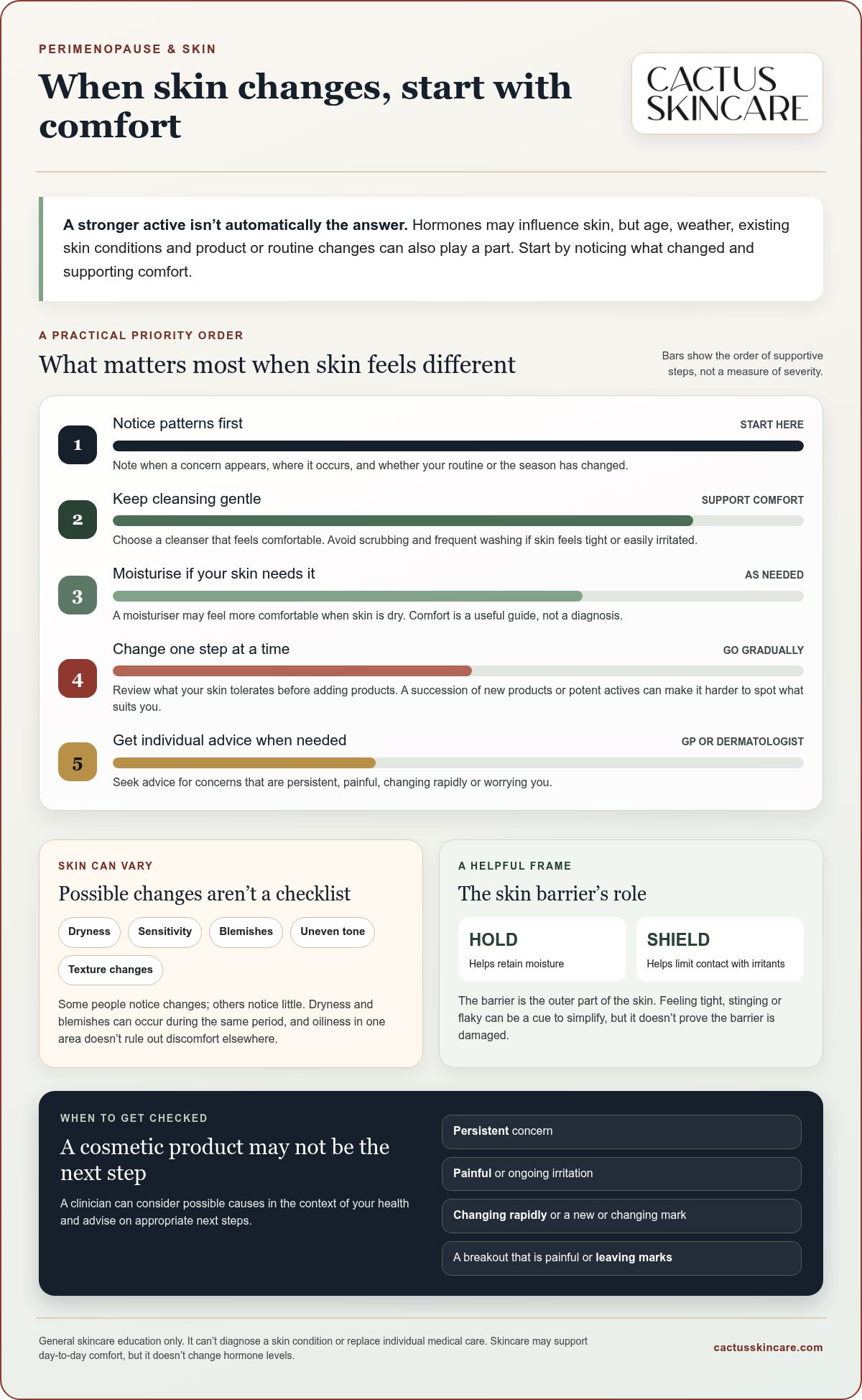
Notice patterns before changing everything. Keep a simple note of when a concern appears, where it occurs and whether anything else has changed, such as your routine or the season. This can help you make measured choices about skincare for perimenopause skin changes, without assuming every new sensation is hormonal or adding stronger products straight away.
When should a skin concern prompt medical advice?
Seek advice from your GP or a dermatologist if a concern is persistent, painful, changing rapidly or worrying you. A new or changing mark, ongoing irritation, or a breakout that’s painful or leaving marks may warrant individual assessment rather than another cosmetic product. A clinician can consider possible causes in the context of your health and advise on appropriate next steps.
This guide offers general skincare education. It can’t diagnose a skin condition, provide prescription advice or assess menopause symptoms, and a cosmetic routine isn’t a substitute for individual medical care. If you’re unsure, getting advice is a considered step, not a sign that you’ve failed to find the right routine.
How hormonal shifts may affect skin hydration and sensitivity
Oestrogen is associated with several skin functions, including moisture, thickness and elasticity. As hormone levels fluctuate through perimenopause, some people may notice changes in how hydrated or comfortable their skin feels. That connection is real, but it isn’t a complete explanation for every dry patch, flare-up or change in sensitivity. Skin responds to several influences at once, and individual experiences differ.
The skin barrier is the outer part of the skin that helps reduce moisture loss and shield the body from irritants. DermNet NZ explains the skin barrier’s protective role in its overview of the skin barrier. If skin feels dry or easily irritated, a gentle cleanse and moisturiser may feel more comfortable than frequent washing or a succession of new products. This is supportive care, not proof that the barrier has been damaged or that a particular product can repair it.
What does the skin barrier do?
Think of the barrier as a carefully organised outer layer: it helps keep water in and limits contact with substances that may irritate the skin. When skin feels tight, stings with familiar products or becomes flaky, simplifying your routine may reduce avoidable friction. Choose a cleanser that feels comfortable, avoid scrubbing, and apply moisturiser if your skin needs it. Comfort is a useful guide, not a diagnosis.
Why can skin feel less predictable?
Hormonal shifts may be one part of the picture, alongside age, weather, existing skin conditions and changes in products or daily habits. Dryness and blemishes can even occur during the same period; oiliness in one area doesn’t rule out discomfort elsewhere. Current understanding supports links between hormones and skin function, while the precise reasons behind an individual’s symptoms can be more complex than a single mechanism.
Try observing what changes and when. Note whether discomfort follows a new product, a change in routine or a shift in the weather, then adjust one step at a time. This makes it easier to notice what your skin tolerates, without assuming every variation is hormonal or layering on potent actives. For skincare for perimenopause skin changes, steady observation can be more useful than a quick routine overhaul.
If you’re considering a simple moisturising step, explore Cactus Skincare moisturisers, including the Intense Hydrating Crème and Light Balancing Crème. Read the product details and directions to help decide what fits your routine. Skincare can support day-to-day comfort, but it can’t diagnose a condition or replace personalised medical advice.
Do you need stronger skincare for perimenopause skin changes?
Not necessarily. A more potent product isn’t automatically a better match for skin that feels different. If your usual routine has become uncomfortable, begin by reviewing what your skin tolerates and which steps you actually need, rather than assuming stronger actives will address the cause. Topical skincare may support skin comfort and appearance, but it doesn’t change hormone levels.
Cosmetic skincare is intended to care for or alter the appearance of skin; products presented as treating a medical condition may be regulated differently. The Australian Therapeutic Goods Administration (TGA) explains the distinction between cosmetics and therapeutic goods. Skincare can’t replace medical assessment or treatment when those are needed.
| Approach | Main aim | Considerations |
|---|---|---|
| Supportive basics | Cleanse gently, moisturise for comfort and use suitable broad-spectrum sun protection during the day. | A simple routine can make it easier to notice what your skin tolerates. Follow product directions. |
| Adding stronger actives | Target a particular concern, such as uneven texture or blemishes. | Retinoids and exfoliating acids can irritate some people. Potency alone doesn’t determine suitability, especially if skin is already uncomfortable. |
When is a simpler routine a sensible starting point?
If irritation appears after introducing a product, consider pausing it or reducing how often you use it, and return to steps your skin already tolerates. A gentle cleanse, a comfortable moisturiser and daytime sun protection may be enough while you observe what’s happening. Change one thing at a time; adding several products together makes it harder to identify what your skin responds to.
What should you know before trying active ingredients?
Actives aren’t inherently unsuitable, but retinoids, exfoliating acids and other potent ingredients can irritate some users. Follow the label rather than copying someone else’s routine, and avoid increasing frequency or combining products beyond their directions. If a reaction persists, worsens or raises a medical concern, seek advice from a GP or dermatologist before experimenting further.
For skincare for perimenopause skin changes, let your current concern and skin comfort guide the pace. A supportive routine is a considered starting point, not a promise to treat hormonal changes.
How to build a comfortable skincare routine during perimenopause
A routine doesn’t need to be elaborate to be considered. Keep the steps your skin tolerates, make adjustments gradually and use consistency to observe comfort, not as a promise of a particular result or timeline. If a product causes irritation, stop using it rather than trying to push through.
A considered morning routine
Let your skin set the pace. You might rinse with water, or use a gentle cleanser if you prefer a fresh start or have residue to remove. Follow with a serum or moisturiser only if it feels useful and comfortable; neither is essential for everyone. The Protective day serum or a moisturising crème may suit your routine, but check each product’s directions and don’t assume it contains sunscreen.
Finish with suitable broad-spectrum sunscreen. In Australia, sun protection matters as part of everyday skincare. Follow the current guidance from Cancer Council Australia on sunscreen, including the product label’s directions for application and reapplication.
A restorative evening routine
Remove makeup and daily residue gently. Avoid scrubbing or cleansing more than needed; if you use a cleansing balm or cleanser, follow its directions and notice how your skin feels afterwards. Apply a moisturiser that feels comfortable. If you’d like to add a serum or another targeted product, introduce it separately and gradually, rather than changing several steps at once.
For a new product, follow the label’s guidance and consider testing it on a small area first. A patch test can’t guarantee that irritation won’t occur, so stop using the product if it causes discomfort or a reaction. If the reaction persists or concerns you, seek advice from a GP or dermatologist.
A brief diary can make this routine more useful. Note what you used, how your skin felt and any changes in your routine or environment. Patterns may help you decide what to keep simple and give you useful context to discuss with a clinician. There’s no fixed results timeline: aim for a routine you can follow comfortably, then review it in response to your skin.
For a measured place to begin, explore Cactus Skincare’s facial skincare and choose only the steps that suit your routine. Thoughtful skincare for perimenopause skin changes is about steady, responsive care, not adding every available product.
Choosing skincare for perimenopause skin changes: a realistic next step
A considered choice starts with your skin today, not a label promising to address every change. Before adding anything, ask: what’s my main concern, what already feels comfortable, and is there a genuine gap in my routine? If you’d rather keep things simple, that’s a sound choice too. A useful routine is one you can follow without adding steps your skin doesn’t seem to need.
Match a product category to the routine gap
If moisturising is the step you’re reviewing, the Intense Hydrating Crème or Light Balancing Crème may be options to explore. The Regenerative night serum and Protective day serum are also available in Cactus Skincare’s range. These product names alone don’t establish that an item suits every person or concern, so read its label and directions before deciding.
Check the full ingredient list for anything you know your skin doesn’t tolerate, and introduce a new product gradually. Avoid choosing solely because a product is described as potent or marketed for a particular stage of life. Consider whether it fits your existing routine and whether you’re comfortable adding another step. If an ingredient or product’s suitability is unclear, reliable clinical advice can help you make a more informed choice.
Know when skincare is not the whole answer
Topical products can form part of everyday facial care, but they can’t change hormone levels or replace menopause care or prescription treatment. If a skin concern persists, causes significant discomfort or raises questions about diagnosis, speak with your GP or a dermatologist. They can assess your individual situation and discuss appropriate care; a cosmetic routine can’t provide that assessment.
There’s no need to perfect your routine all at once. Choose the step that addresses your current concern, pay attention to how your skin responds and reconsider if comfort worsens. This measured approach keeps skincare for perimenopause skin changes grounded in your needs rather than assumptions about what your skin should do.
If you’d like to explore facial care made in Australia, explore Cactus Skincare’s Australian-made facial care. Take your time, read product details and choose only what feels relevant to your routine.
Choose a routine that feels right for your skin
Skin can shift during perimenopause, but dryness, sensitivity or breakouts don’t point to one cause or call for the same response. Let comfort and your current concern guide your choices. A simple routine, introduced gradually, can help you notice what suits your skin without assuming that stronger products are automatically better.
Remember, topical skincare can support everyday care and appearance, but it can’t change hormone levels or replace personalised medical advice. If a concern persists, causes significant discomfort or worries you, speak with your GP or a dermatologist.
For skincare for perimenopause skin changes, consistency and thoughtful choices matter more than a crowded routine. Cactus Skincare’s Australian-made range includes cleansers, crèmes, serums, facial oils and masks. Explore Cactus Skincare’s Australian-made facial care and consider what, if anything, would be a useful addition to your routine.
Start gently, stay curious about what your skin needs, and give yourself permission to keep things simple.
Frequently Asked Questions
Can perimenopause change your skin?
Yes, skin can feel or look different during perimenopause, though changes vary from person to person. Some people notice dryness, sensitivity, blemishes or changes in tone and texture; others notice little change. Hormonal shifts may be one influence, but age, environment, existing skin conditions and changes to products or routine can also matter. A symptom alone can’t confirm its cause, so observe patterns rather than self-diagnosing.
What is the best skincare for perimenopause skin changes?
There isn’t one best routine for everyone. Start with skincare for perimenopause skin changes that suits your current concern and feels comfortable: gentle cleansing, a moisturiser you tolerate and suitable daytime sun protection. For those interested in mindful, stage-specific options, holistic brands like Aroota offer gentle formulations designed for women at every stage of life. Add an optional product only if it serves a clear purpose, and introduce one change at a time. Read product labels and directions, and seek clinical advice if you’re unsure about persistent or concerning symptoms.
Can skincare reverse hormonal skin changes?
No, topical skincare can’t reverse hormone changes or alter hormone levels. Products may support everyday care and the appearance or comfort of skin, depending on the product and individual response, but they don’t replace assessment or treatment from a health professional. Be cautious of claims that a cosmetic product can correct hormonal changes. If symptoms are troubling you, discuss them with your GP or dermatologist rather than relying on skincare alone.
Should I stop using retinol or exfoliating acids during perimenopause?
Not automatically. Retinol and exfoliating acids can suit some people, but may irritate others, particularly if skin feels uncomfortable or sensitive. Follow the product directions and avoid increasing use or layering several actives at once. If irritation begins after introducing a product, stop or pause it; don’t push through persistent discomfort. For ongoing reactions or questions about a specific ingredient, seek advice from a GP or dermatologist.
How can I care for dry skin during perimenopause?
Keep the routine gentle and focused on comfort. Try cleansing without scrubbing or washing more than needed, then apply a moisturiser that feels comfortable and follow its label. Avoid adding several new products at once, as this can make it harder to identify what your skin tolerates. If dryness is persistent, painful, worsening or accompanied by other worrying symptoms, a GP or dermatologist can help assess possible causes.
When should I see a doctor about skin changes during perimenopause?
Speak with your GP or a dermatologist if a skin concern persists, is painful, changes rapidly or worries you. A clinician can assess symptoms in the context of your health and advise whether further care is appropriate. Skincare information can’t diagnose a condition, and a cosmetic routine isn’t a substitute for individual medical advice. Seek help rather than continuing to experiment with products if symptoms are worsening or causing significant discomfort.
Is sunscreen still important during perimenopause?
Yes. Sun protection remains an important part of daytime skincare in Australia, whatever your stage of life. Choose a suitable broad-spectrum sunscreen and follow its label for application and reapplication; sunscreen doesn’t replace other sun-protective measures. Don’t assume a serum or moisturiser provides SPF unless the product label clearly states this. If you have questions about sun protection for your skin or a changing mark, ask a health professional.