

Natural Cleansing Balm: How to Use It for a Thorough, Gentle Cleanse
What makes a cleanse feel comfortable isn’t necessarily choosing the richest balm. Technique and rinsing matter, too. A natural cleansing balm can help lift makeup, sunscreen and everyday build-up, but the word “natural” alone doesn’t guarantee a formula will suit your skin or rinse away cleanly.
If you’re unsure whether to apply balm to dry or damp skin, worried it might leave a film, or wondering if you need another cleanser, those are sensible questions. Directions vary, so check the product label instead of assuming every balm works the same way.
This guide explains what a cleansing balm does, how to use one and how to decide whether it suits your routine. You’ll learn how to rinse thoroughly, assess how your skin feels afterwards, and choose whether to use balm alone or follow with a second cleanser. A comfortable cleanse depends on the product, your technique and a complete rinse.
Key Takeaways
- A natural cleansing balm can help loosen makeup, sunscreen and daily residue, but formulas and directions vary.
- Check the product label before deciding whether to apply your balm to dry or damp skin, or add water to emulsify it.
- Rinse thoroughly, then notice how your skin feels rather than expecting every balm to leave the same finish.
- Decide whether to use balm alone or follow with a second cleanser based on your routine, preferences and how your skin responds.
- Compare the ingredient list and directions when choosing a balm. A skin-type label can’t predict how you’ll tolerate a specific formula.
What Is a Natural Cleansing Balm, and What Does It Do?
A cleansing balm is a rinse-off facial cleanser, often with a rich balm texture, that helps loosen makeup, sunscreen and everyday residue before you wash it from the skin. That’s its basic role. Ingredients, textures and directions vary, so “natural” doesn’t describe one standard formula or method of use.
Many balms have an oil-rich base. Oil can help loosen oily materials on the skin, including some makeup and sunscreen residue, while cleansing ingredients in the formula help lift them away. Some balms change texture when water is added; others have different removal directions. Follow the product label rather than assuming every balm emulsifies in the same way.
The format has a long history: Cold cream, an older emulsion of oil and water, is often considered a precursor to modern cleansing balms. Today’s products vary, so the comparison provides context, not guidance about any particular balm’s ingredients or performance.
A cleanser cleanses. It isn’t automatically a moisturiser, exfoliant or treatment for a skin condition, even if it leaves skin feeling soft or contains ingredients associated with other skincare roles. Think of it as a step for removing surface residue, not a promise to change your skin beyond that function.
How does cleansing balm differ from a foaming or gel cleanser?
A balm is typically massaged over the skin, while gel or foaming cleansers usually have a lighter, more fluid texture and may lather with water. Their removal methods also vary by formula. Neither texture is inherently better: performance depends on the complete formula and whether you use it as directed. You can choose the feel you prefer without changing the rest of your routine.
Does “natural” mean a balm is automatically gentle?
No. “Natural” alone doesn’t establish whether a product will suit your skin or guarantee a reaction-free experience. Read the full ingredient list and directions, and take your own sensitivities into account. A botanical ingredient can still be unsuitable for an individual. If a product causes discomfort, stop using it rather than persisting because its label sounds reassuring.
How Does a Natural Cleansing Balm Lift Makeup and Sunscreen?
Makeup, sunscreen and sebum can include oil-based components that cling to the skin. The oils and cleansing agents in a balm can help loosen this material so it can be lifted away during rinsing. This relates to the principle often described as “like dissolves like”; the oil cleansing method offers more background on that approach.
A balm can help lift product residue, but cleansing doesn’t mean dissolving or removing every trace of every product. The result depends on the complete formula, how much you apply, how you massage it and how thoroughly you rinse. Makeup and sunscreen differ, too, so don’t assume one cleanser will remove every product equally well.
Some balm formulas emulsify when water is added. Emulsification means the product changes as water mixes with it, often becoming lighter or milky, which can help it rinse away. This change isn’t universal. Check the product directions before adding water or expecting a particular texture.
Why do you massage balm onto dry skin?
Applying balm to dry skin is common guidance because it lets the product spread directly over dry makeup and sunscreen. Gently massage it across the areas you want to cleanse; pressure and scrubbing aren’t needed. Keep the motion comfortable, especially around delicate areas, and follow the label if it gives different directions. Product-specific instructions take precedence over a general method.
What does adding water change?
If the directions call for emulsifying, wet your fingertips gradually and continue massaging rather than rinsing straight away. Look for the texture change described on the label, then rinse well with lukewarm water. Continue until your skin feels clean and comfortable. A thorough rinse matters, but no method can promise that every formula will leave the same finish on every person.
For Cactus Skincare’s Cleansing Balm, check the current product information for its ingredient list and directions before deciding how to apply or rinse it. Follow those formula-specific instructions rather than assuming it emulsifies or should be used in a particular way.
How to Use a Natural Cleansing Balm: A Simple Step-by-Step Method
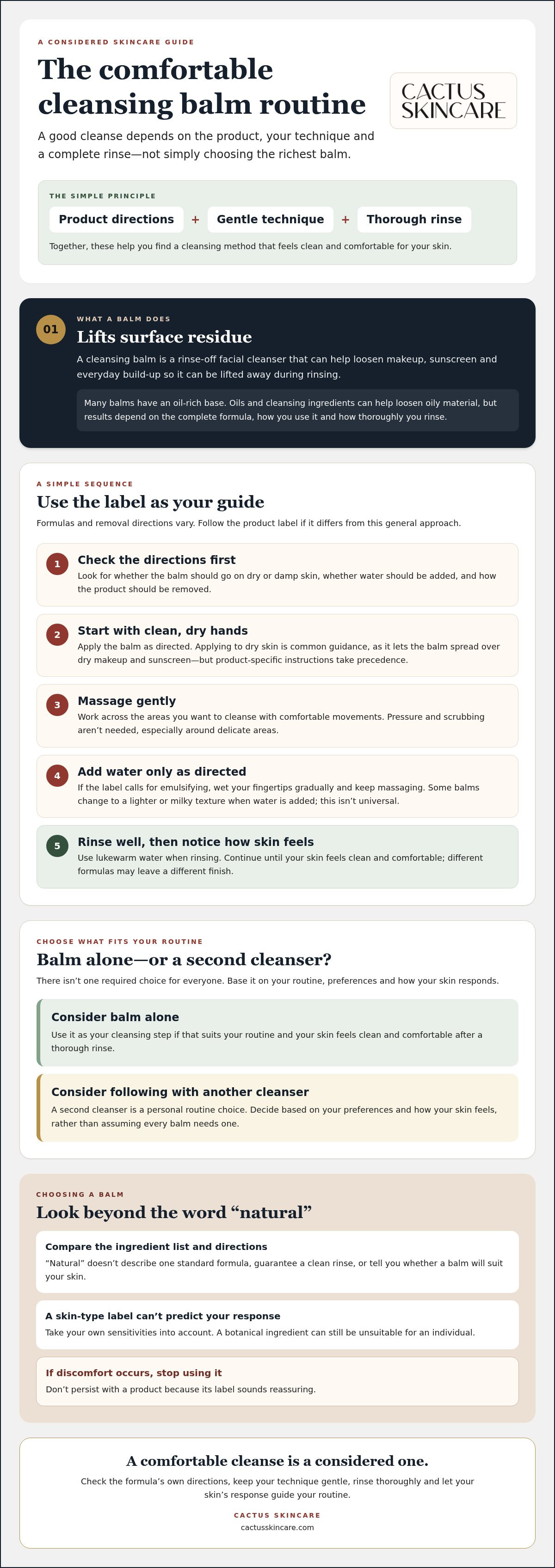
A considered cleanse doesn’t need to be complicated. Use this sequence as a starting point, but let the product label guide you if its directions differ. Balm formulas vary, so don’t assume they’re all applied or rinsed in exactly the same way.
Clean, dry hands; follow the label; massage gently; emulsify if directed; rinse thoroughly; assess how your skin feels.
- Wash and dry your hands. This helps keep application clean and gives you a steady grip on the product.
- Check the directions. Confirm whether the balm should go on dry or damp skin, and whether it’s intended for use around the eyes.
- Use the labelled amount. Start with the amount on the label rather than guessing a universal quantity.
- Apply as directed. Spread the balm with your fingertips over the areas you want to cleanse. If the instructions allow use around the eyes, use a light touch and avoid vigorous rubbing.
- Add water if instructed. Wet your fingertips gradually and massage again if the product directions call for emulsifying.
- Rinse well. Continue until your skin feels clean and comfortable, then pat it dry with a clean towel.
How much balm should you use, and how long should you massage?
There’s no universal amount or massage time for every formula. Begin with the quantity and method on the label. If the balm doesn’t spread comfortably across the area you’re cleansing, add a little more as needed. Use gentle, comfortable pressure rather than scrubbing, particularly near the eyes. Stop and rinse if your skin feels irritated.
Should you follow balm with a second cleanser?
Double cleansing means using an oil-based cleanser, such as a balm, first, then washing with another cleanser. The second cleanse is an option, not a compulsory part of every routine. After rinsing, consider whether makeup or product still seems to remain and whether your skin feels comfortable. If the balm has rinsed away and your skin feels clean, you may not need another step. If you choose to cleanse again, keep the second wash gentle. For active individuals washing away outdoor sunscreen and sweat, pairing an initial balm with natural soaps from Daily Miles Beard & Soap Co can offer a balanced second step. If repeated cleansing leaves your skin uncomfortable, reassess your routine.
How to Decide Whether a Natural Cleansing Balm Fits Your Skin and Routine
Choose a cleanser by its role, feel and how your skin responds, not by texture or a skin-type label alone. A balm’s richness and rinse-off experience depend on its formula and how you use it. If it feels too substantial or difficult to rinse, that doesn’t mean every balm will feel the same. It may be a sign to reconsider that product or check its directions more closely.
Use this comparison to clarify what matters to you:
| What matters | Balm | Gel or foaming cleanser | Double cleansing |
|---|---|---|---|
| Makeup use | May suit a first cleanse when you wear makeup or sunscreen. | May suit a straightforward single cleanse, depending on the formula and what you need to remove. | Adds a second cleanse after the first, if you feel it’s useful. |
| Preferred texture | Richer, balm-like application. | More fluid gel or a lathering texture. | Combines two cleanser textures or steps. |
| Routine preference | One cleansing step if it meets your needs. | A single, familiar wash. | An extra step that takes more time. |
Is balm suitable for oily, dry or sensitive-feeling skin?
No skin-type category can predict how you’ll tolerate a particular formula. If your skin feels oily, dry or sensitive, consider the balm’s ingredient list and directions, then introduce it cautiously. Notice whether it rinses comfortably and how your skin feels afterwards. Don’t persist through discomfort: stop using the product if irritation occurs.
When is one cleanse enough, and when might double cleansing help?
One cleanse may be enough if you’re not wearing much makeup, the balm rinses as directed and your skin feels clean and comfortable. If you’ve worn makeup or sunscreen, or still notice product after rinsing, you might choose to follow with another cleanser. More steps aren’t automatically better. Pay attention to how your skin responds rather than adding a second wash by default. This article’s double-cleansing method explains how to approach that second step without making it compulsory.
To assess a specific option, check the ingredient list and directions before deciding whether it suits your preferences. Review the Cactus Skincare Cleansing Balm details and use the product information to judge fit rather than relying on the balm format or a skin-type label alone.
How to Build a Considered Cleansing Ritual with Cactus Skincare
Once you know what you need from a cleanser, compare products by their full ingredient lists, directions and fit with your routine. Cactus Skincare’s range includes a product named Cleansing Balm. Check the current product details before deciding whether it’s right for you, including its ingredients, texture and removal instructions. Don’t assume a natural cleansing balm will suit simply because of its name or format.
What should you check on a cleansing balm product page?
Read beyond the front-of-pack description. Look for:
- The complete ingredient list, so you can check for ingredients you prefer to avoid or have reacted to before.
- Directions for use and removal, including whether the balm is applied to dry or damp skin and whether water should be added before rinsing.
- Any stated cautions, such as guidance about use around the eyes.
- Evidence behind specific claims, especially statements about being natural, gentle or suitable for a particular concern.
Then compare those details with your preferences. If you like a simple routine, consider whether the directions feel manageable and whether the product’s described use matches what you want from a cleanser. Assess claims and ingredients on their own merits. “Natural” alone doesn’t establish suitability or a particular result.
How can the cleansing balm sit within a simple routine?
Think of balm as a cleansing step, not a substitute for every product in your skincare routine. After rinsing, continue with the other steps you choose to use, following their own directions. A second cleanser is optional. Decide based on how the balm rinses and how your skin feels, rather than adding steps automatically.
Cactus Skincare products are manufactured in Australia. That tells you where they’re made, not whether a product will deliver a particular result or suit every person. Your own assessment of the ingredients, directions and skin response remains central.
Ready to assess the fit? Review the current information for Cactus Skincare’s Cleansing Balm, then choose the cleansing routine that feels comfortable and sustainable for you.
Make Your Next Cleanse Simple and Considered
A natural cleansing balm can be a useful first step for loosening makeup, sunscreen and daily residue, but results depend on the formula and how you use it. Follow the product directions, massage with a light touch and rinse thoroughly. A second cleanser is an option, not a rule. Choose based on what you’ve worn and how your skin feels afterwards.
Fit matters more than a label. Check the full ingredient list and instructions, then pay attention to your skin’s response. Cactus Skincare’s range includes a Cleansing Balm, and the brand states that its products are manufactured in Australia. That’s useful context, not a promise of a particular cleansing result or a claim about suitability.
Ready to consider it for your routine? Explore Cactus Skincare’s Cleansing Balm and review its current product information before use. Take a measured approach, keep the steps that work for you, and let a comfortable, well-rinsed cleanse be enough.
Frequently Asked Questions
What is a natural cleansing balm?
A natural cleansing balm is a rinse-off cleanser marketed as natural, usually in a rich balm format. The term doesn’t specify one standard ingredient list. Balm formulas vary, and some contain oil-rich components that help loosen makeup, sunscreen and everyday residue so it can be rinsed away. It’s a cleansing step, not automatically a moisturiser or treatment. Check the full ingredient list and directions rather than relying on the word “natural” alone.
How do you use a natural cleansing balm?
Follow the product label, since application and removal directions differ. In general, start with clean, dry hands and use the labelled amount on your skin as directed. Gently massage with your fingertips without scrubbing, then add water if the directions call for emulsifying. Rinse thoroughly and notice how your skin feels. Around the eyes, use a light touch and apply the product there only if its instructions allow it.
Do you use cleansing balm on wet or dry skin?
Many cleansing balms are designed for use on dry skin, but this isn’t a rule for every formula. Dry application can help the balm spread over dry makeup or sunscreen before water is introduced. Check the product directions first. If they instruct you to use damp skin, follow that guidance instead. The label should also explain whether to add water during massage or rinse the balm away directly.
Should you double cleanse after using a cleansing balm?
Not necessarily. Double cleansing means using a balm or another oil-based cleanser first, then following with a second cleanser. Consider the second step if you’ve worn makeup or sunscreen and still notice product after rinsing the balm as directed. If your skin feels clean and comfortable, another cleanse may not be needed. Adding steps isn’t automatically better, so base the choice on your routine and skin response.
Is a cleansing balm suitable for sensitive skin?
It may suit some people, but a sensitive-skin label or the word “natural” can’t predict how you’ll respond to a specific formula. Read the complete ingredient list and directions, and consider any ingredients you already know don’t suit you. Introduce the balm cautiously and pay attention to comfort during and after use. If it causes irritation or discomfort, stop using it rather than trying to push through.
Can a cleansing balm remove sunscreen and waterproof makeup?
A balm may help loosen sunscreen and makeup, including some waterproof products, but removal depends on the specific formula and product. Don’t assume every balm will remove every sunscreen or waterproof mascara completely. Follow the cleanser directions and the makeup or sunscreen removal guidance on its packaging. Use gentle movements around the eyes and avoid vigorous rubbing. If residue remains after a thorough rinse, consider whether another suitable cleansing step is needed.
How often should you use a cleansing balm?
Use a cleansing balm as often as suits your routine and the product directions. You might choose it on days you wear makeup or sunscreen, or use it as your regular cleanser if it rinses comfortably and meets your needs. There’s no universal schedule for every formula or person. Pay attention to how your skin feels after cleansing. If it becomes uncomfortable or irritated, stop and reassess how you’re using the product.