

Lightweight Facial Oil for Oily Skin: How to Choose and Use One
Could facial oil leave oily skin feeling comfortable rather than slick? It’s a fair concern: the wrong texture or too much product can feel heavy, and “lightweight” on a label doesn’t tell you everything. If you’re searching for “lightweight facial oil oily skin”, look beyond the claim and consider the formula, your skin’s response and how you apply it.
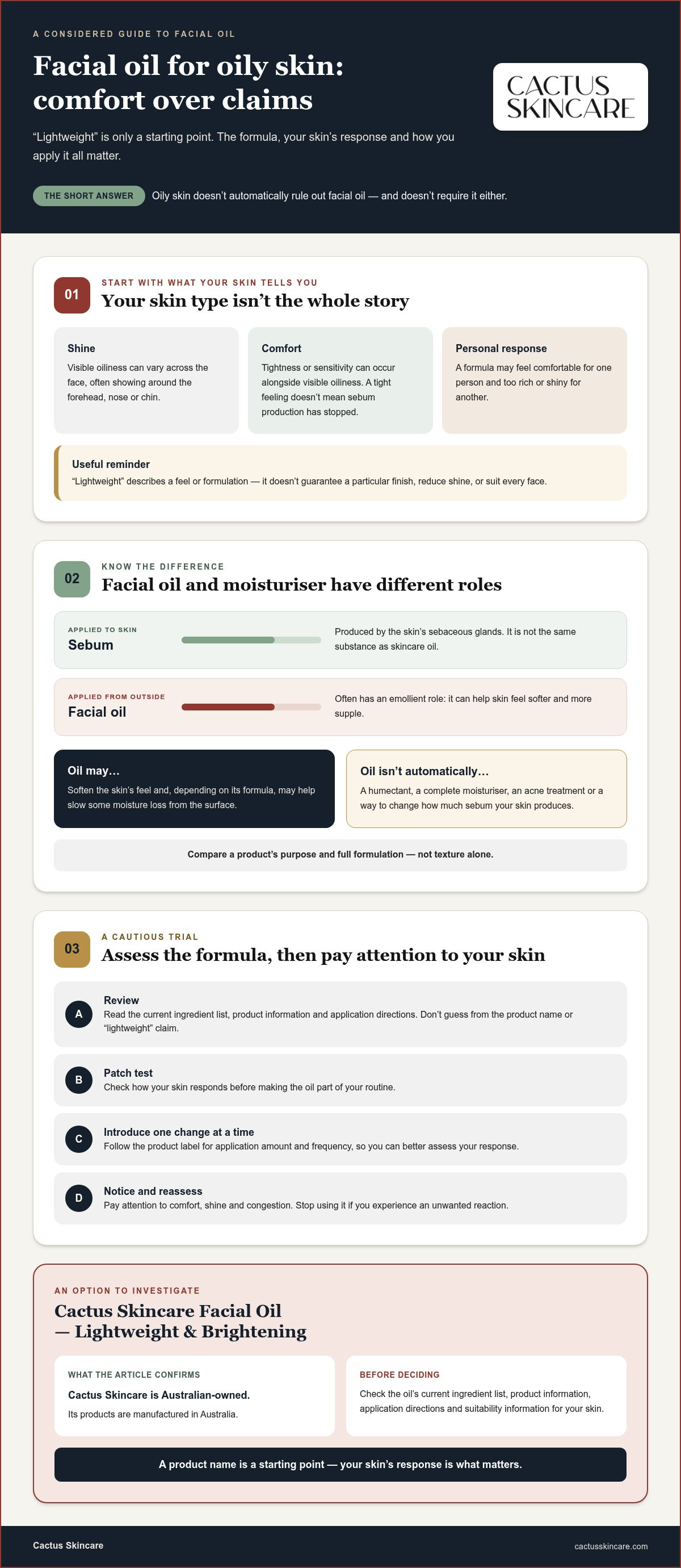
Oily skin doesn’t automatically rule out facial oil, but an oil isn’t a substitute for moisturiser. They have different typical roles, and neither guarantees balanced skin or fewer breakouts. A measured trial can help you decide whether an oil feels right for you.
In this guide, you’ll learn what facial oils can and can’t do, how to assess ingredient lists and product claims, and how to introduce an oil cautiously. We’ll also look at Cactus Skincare’s confirmed Facial Oil - Lightweight & Brightening as an option to investigate. The brand is Australian-owned, and its products are manufactured in Australia. Before deciding whether this oil suits your skin, check its current ingredient list, product information and application directions.
Key Takeaways
- A lightweight facial oil oily skin routine depends on finding a formula and finish that feel comfortable for you, not simply trusting the word “lightweight”.
- Facial oil and moisturiser have different typical roles. Compare the product’s purpose and formulation rather than judging by texture alone.
- Before trying an oil, review its ingredients, patch test it and introduce it as one change at a time. Follow the product label for application amount and frequency.
- Notice changes in comfort, shine or congestion as you trial the formula. Stop using it if you experience an unwanted reaction.
- Cactus Skincare’s Facial Oil - Lightweight & Brightening is an option to investigate. Check its current ingredient list, directions and suitability information before deciding.
Can a lightweight facial oil suit oily skin? Start with what oily skin needs
If your skin already looks shiny, adding facial oil may sound like an invitation to more shine or congestion. That concern makes sense, but the label “oily” can’t predict how your skin will respond to a particular formula. Texture, ingredients and your own comfort all matter.
Oily skin is commonly associated with visible shine and sebum, the oil produced by the skin’s sebaceous glands. Sebum is made by your skin; oils in skincare are applied to its surface. They aren’t identical substances, and their effects can vary with the formula and the person using it. You can read more about the sebaceous gland and its role in producing sebum.
A facial oil can soften the skin, but it isn’t automatically a complete moisturiser. Its typical role is emollient: it can contribute to a smoother, more supple feel. A moisturiser may include other ingredients and serve a broader role in a routine. The product label and formulation matter more than the category name.
What does oily skin actually mean?
Shine may be most noticeable across the forehead, nose or chin, but skin isn’t always one consistent type across the whole face. Dehydration or sensitivity can occur alongside visible oiliness. A tight or uncomfortable feeling, for example, doesn’t necessarily mean your skin has stopped producing sebum.
There’s no need to strip or aggressively dry the skin simply because it looks shiny. Nor does oiliness mean you must add facial oil. Consider how your skin feels and responds to the products you use, rather than trying to fit every concern into one label.
Why consider facial oil if your skin already looks shiny?
Some people explore an oil because they want dry-feeling areas to feel softer or prefer the finish of a particular formula. Others may find an extra layer too rich. Both responses are valid. A product described as lightweight isn’t guaranteed to feel light on every face, and you shouldn’t assume it will reduce shine.
Facial oil is optional, not an acne treatment, and oily skin doesn’t need it by default. If you’re weighing up a lightweight facial oil oily skin routine, prioritise personal comfort over a skin-type claim. A formula may suit one part of your face, or it may not suit your routine at all. First understand how oils and moisturisers differ, then decide whether an oil has a useful place for you.
How lightweight facial oil interacts with the skin barrier
The skin barrier is the outermost part of your skin, often called the stratum corneum. It helps limit moisture escaping from the skin’s surface while acting as a protective boundary. Think of it as an organised outer layer, not a seal that skincare can simply switch on or off.
A facial oil sits on the skin’s surface and may help soften its feel. Depending on the formula, it may also slow some moisture loss by forming a layer over the skin. The effect varies: an oil’s composition and how it’s combined with other ingredients influence how it behaves. An oil isn’t automatically a humectant, an ingredient that attracts or holds water, and it may not provide everything a moisturiser does.
Facial oil, sebum, and the skin barrier
Sebum is produced by the skin’s sebaceous glands; skincare oil is applied from the outside. They have different sources and roles. Adding an oil shouldn’t be assumed to change how much sebum your skin produces. Instead, consider whether the formula’s surface feel suits you and whether your routine leaves your skin comfortable.
Some moisture naturally escapes through the skin. This is called transepidermal water loss, or simply water vapour passing from the skin into the air. A formula that leaves an emollient layer may help limit that loss, but the degree depends on its full formulation and how your individual skin responds.
What “lightweight” can, and can’t, tell you
“Lightweight” is a sensory or formulation description, not a universal measure or guarantee of a particular finish. One oil may feel silky and settle comfortably for one person, while another may feel shiny or heavy. The whole formula matters, including the combination of ingredients, not just the word on the front of the pack.
Read the ingredient list rather than guessing what a product contains from its name or marketing language. If you’re considering a lightweight facial oil oily skin formula, look for clear product information and directions, then assess the texture on your own skin. Ingredient function can offer clues about how a formula may behave, but it can’t promise the same result for everyone.
An ingredient’s general role can guide your choice, but your skin’s response is what determines whether a formula suits you. To review an option, explore Cactus Skincare’s facial oil range and check the current ingredient information before deciding.
Lightweight facial oil vs moisturiser: compare the role, not just the texture
A product’s feel can help you decide whether you’ll enjoy using it, but texture alone doesn’t tell you what it does in a routine. Facial oils and moisturisers can both leave skin feeling softer, yet they aren’t interchangeable. Formulas vary, so use these typical roles as a starting point, then check the product information.
| Product type | Typical role | Possible feel |
|---|---|---|
| Facial oil | Emollient layer that can soften skin and may help reduce moisture loss | Can feel silky, rich or shiny, depending on the formula |
| Moisturiser | Helps hydrate and soften skin; its ingredients and role vary by formula | May feel light, rich or somewhere in between |
| Oil-free moisturiser | A moisturiser formulated without oils, with its own blend of ingredients | May feel lighter to some people, but the finish varies |
When might facial oil add something to a routine?
If you like the feel or finish of an oil-based product, you might choose to try one, particularly on areas that feel dry or less comfortable. Oily skin can still feel dry, but that sensation doesn’t point to one definite cause or mean oil is the answer. Consider how your skin feels after your usual moisturiser and whether an additional product seems useful. Don’t add a step simply because your skin is oily.
A lightweight facial oil oily skin routine is a personal choice, not a requirement. If you decide to explore one, introduce it cautiously and judge it by your own comfort and response.
When might a moisturiser or simpler routine be enough?
If your current moisturiser leaves your skin comfortable, there may be no need to add facial oil. A simpler routine can also be easier to assess because you’re less likely to confuse which product is affecting how your skin feels. Oil-free moisturisers aren’t automatically better for oily skin; the right choice depends on the whole formula and your preferences.
To understand how products can fit together, see the guide How to Layer Serum and Moisturiser for Maximum Absorption. In the meantime, compare product labels and directions, then choose a routine that feels comfortable and manageable. More steps don’t automatically mean better care.
How to trial a lightweight facial oil on oily skin without guesswork
A careful trial won’t guarantee a particular result, but it can help you make a more informed decision. Keep your routine steady and change one thing at a time. That makes it easier to notice whether the oil feels comfortable or seems to contribute to unwanted shine or irritation.
A measured way to introduce facial oil
Start with the full ingredient list. Check it against ingredients you already know you’re sensitive to, and read the product directions before use. If the information you need isn’t clear, don’t guess at the application amount or frequency.
Next, patch test according to the product’s guidance. If no directions are provided, ask a qualified health professional how to test a new skincare product safely. A patch test is a cautious screening step, not a guarantee that a reaction won’t occur later or across your whole face.
If you decide to proceed, introduce the oil as your only new product. Use it as directed on the label without changing other products at the same time. This makes it easier to interpret what you notice.
What to monitor during the trial
Pay attention to the immediate finish as well as how your skin feels over time. A simple note on your phone can help you compare observations without relying on memory:
- Feel: Does your skin feel comfortable, or does the product seem heavy or sticky?
- Shine: Do you notice more shine than you prefer after application?
- Visible changes: Note any changes in your skin, while remembering that a breakout or other change can have more than one possible cause.
- Routine: Record other products or changes that may affect how your skin feels.
Don’t assume every change is caused by the oil, but take discomfort seriously. Stop using the product if irritation occurs. If irritation persists, symptoms worsen or you’re concerned about a skin change, seek advice from a qualified health professional.
If you’re considering Cactus Skincare’s confirmed Facial Oil - Lightweight & Brightening, review its current product information and ingredient list before deciding. The available information here doesn’t confirm its ingredients, application directions or performance, so use the product’s current label to guide any trial.
Is Cactus Skincare’s Lightweight & Brightening Facial Oil worth considering?
It may be worth investigating if you’re curious about an oil-based product and are prepared to assess its ingredients, directions and feel against your preferences. Facial Oil - Lightweight & Brightening is a confirmed Cactus Skincare offering. The available product information here doesn’t confirm its ingredients, application directions or specific performance, so the name alone can’t tell you how it will feel or whether it will suit your skin.
Cactus Skincare is Australian-owned, and its products are manufactured in Australia. That provides context about the brand, but it doesn’t replace checking the details of the individual formula. Base a lightweight facial oil oily skin choice on the product information and your own experience, not on a promise implied by its name.
What to check before choosing this facial oil
Before deciding, use this checklist to assess whether the product merits a cautious trial:
- Ingredient transparency: Review the current, full ingredient list. Check it for ingredients you already know you’re sensitive to, and seek clarification if information you need isn’t available.
- Stated directions: Look for manufacturer-provided guidance on how to apply the product, including the amount and frequency. Follow the current label rather than relying on generic advice for facial oils.
- Texture preferences: Consider the finish you enjoy and whether you’re comfortable with the possibility of an oil feeling richer or shinier than expected. “Lightweight” doesn’t guarantee the same feel for everyone.
- Personal sensitivities: Think about how your skin has responded to other products. If you choose to try it, introduce it cautiously and follow the product’s directions.
No product name or general ingredient description can establish that a formula is non-comedogenic, acne-safe or suitable for everyone. Suitability depends on the complete formula, your individual skin and the other products in your routine. If the ingredient list or directions don’t give you enough confidence to make an informed choice, it’s reasonable to wait.
A considered next step for your routine
If you’re interested in the feel of facial oil and willing to assess a new product thoughtfully, this offering may be one to explore. If you prefer your current moisturiser, dislike an oily finish or have concerns about personal sensitivities, you can skip the extra step. Facial oil is optional, not a clinical treatment or a requirement for oily skin.
For the latest details, Explore Cactus Skincare and review the product information before deciding.
Choose a routine that feels right for your skin
Oily skin doesn’t automatically rule out facial oil, but an oil isn’t essential for everyone. It has a different typical role from moisturiser, and “lightweight” doesn’t guarantee a particular finish or response. The best guide is how your skin feels and behaves with the full formula.
If you’re considering a lightweight facial oil oily skin routine, take a measured approach: check the ingredient list and directions, patch test cautiously and introduce one new product at a time. Keep your moisturiser if it already leaves your skin comfortable; more steps aren’t always better.
Cactus Skincare is an independently Australian-owned skincare brand, and its products are manufactured in Australia. Facial Oil - Lightweight & Brightening is a confirmed offering, but assess its ingredients, directions and suitability using the current product information. You can explore Cactus Skincare and review those details before deciding whether it belongs in your routine.
There’s no need to rush. Choose thoughtfully, notice how your skin responds, and keep the routine that feels comfortable for you.
Frequently Asked Questions
Is facial oil suitable for oily skin?
Yes, facial oil can suit some people with oily skin, but it’s optional and the label alone can’t predict your response. The question behind “lightweight facial oil oily skin” is whether a particular formula fits your skin and routine, not whether all oils are suitable. Check the full ingredient list for known sensitivities, consider how it fits with products you already use, then introduce it as your only new step and observe comfort and visible shine.
Can lightweight facial oil cause clogged pores?
It may not suit everyone, and “lightweight” doesn’t guarantee a formula will work for acne-prone skin or prevent congestion. Check the complete ingredient list and follow the product’s directions. If you choose to try it, patch test cautiously and introduce it as your only new skincare change so you can assess your response. Stop using it if you notice irritation or worsening congestion, and consider advice from a qualified health professional.
How do you use facial oil on oily skin?
Follow the directions for your specific product, because application amount and frequency can vary between formulas. Before trying it, review the ingredients for known sensitivities and patch test cautiously. Introduce the oil as your only new skincare change, then notice how your skin feels and whether you’re comfortable with the finish and shine. Don’t use more than the label directs, and remember that facial oil isn’t an acne treatment.
What happens if you use facial oil instead of moisturiser?
The result depends on the formula and what your skin needs. Facial oil and moisturiser have different typical roles, so an oil may not provide every function of a moisturiser and shouldn’t automatically be treated as a replacement. If your current moisturiser leaves your skin comfortable, there’s no need to swap it out. Check the directions for any product you’re considering, and assess a new routine by your skin’s response.
Is lightweight facial oil better than oil-free moisturiser for oily skin?
Neither option is automatically better for everyone with oily skin. Facial oils and oil-free moisturisers can differ in ingredients, texture and intended role, and people’s preferences and responses vary. Compare the full formula with what your current routine provides, if anything feels missing. If your skin feels comfortable with the products you already use, a simple routine may be enough. You don’t need to add a step just because your skin is oily.
Can you use facial oil if you have acne-prone skin?
You can consider one, but acne-prone skin may respond differently to different formulas. Don’t assume a facial oil will treat acne or that it will necessarily worsen it. Review the ingredient list, follow the product directions and introduce it cautiously, changing one product at a time. Stop if irritation or congestion worsens. If acne persists or concerns you, seek advice from a qualified health professional rather than relying on facial oil to treat it.