

How to Use Cleansing Balm: A Gentle Step-by-Step Guide
If you’re unsure how to use cleansing balm, the key is usually to follow the product’s directions and give it time to loosen what’s on your skin. Whether to apply it to dry or damp skin, how to rinse it off and whether to use another cleanser afterwards can all vary by formula and routine.
A cleansing balm is typically worked over the skin, then mixed with water before rinsing. Used gently, this can be a way to lift daily products without a brisk, foaming wash. The label matters, especially if your skin is easily unsettled or you prefer a less noticeable finish.
This guide explains how to apply, emulsify and rinse cleansing balm, and how to decide whether a second cleanse makes sense for your routine. Use the steps as a practical starting point, while letting the product directions and your skin’s comfort guide any adjustments.
Key Takeaways
- Learn how to use cleansing balm with a simple apply, emulsify and rinse approach, while following the product’s directions.
- Understand when a cleansing balm may fit into your routine, including for makeup or sunscreen if the label supports that use.
- Assess a lingering rich feel without assuming it means the balm is unsuitable for your skin.
- Decide whether a second cleanse fits your products, routine and skin comfort.
- Keep cleansing gentle, then continue with the next steps in your usual skincare routine.
How to use cleansing balm: what it does and when to use it
A cleansing balm is an oil-based cleanser with a soft, balm-like texture. You work it over the skin and rinse it away. It’s one cleansing option, not a required step in every routine. Formulas and directions differ, so check the label before deciding how to use a particular balm.
What is cleansing balm, and how does it cleanse?
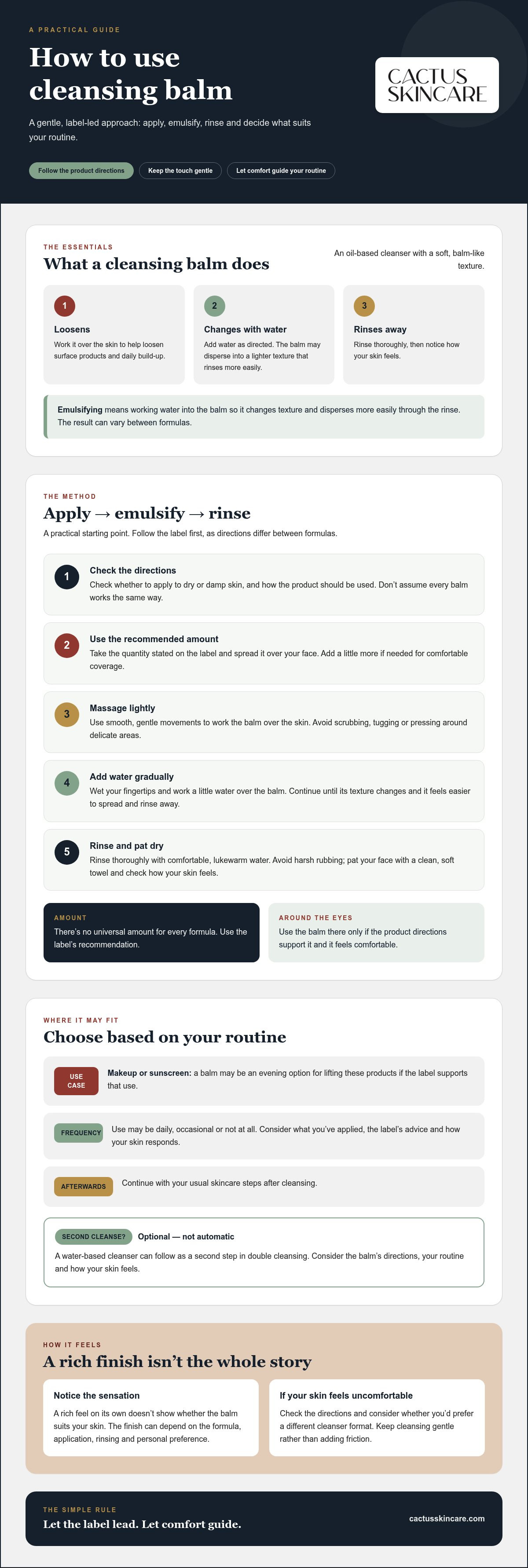
The balm’s texture makes it easy to spread over the skin, where it can help loosen surface products and daily build-up. When you add water as directed, it may disperse into a lighter texture that rinses away more easily. This process is called emulsification: water helps an oil-based product mix and spread through the rinse. The result can vary between formulas.
Whether a balm is suitable for makeup or sunscreen removal depends on its directions. If the label supports that use, it may be an evening option for lifting those products before rinsing. For a broader overview of cleanser types and their place in a routine, see Cleanser.
After rinsing, notice how your skin feels. A rich sensation on its own doesn’t tell you whether the balm suits you. The finish can depend on the formula, how you applied and rinsed it, or your personal preference. If your skin feels uncomfortable, check the directions and consider whether you want to try a different cleanser format.
When does cleansing balm fit into a skincare routine?
A cleansing balm often fits into an evening routine, particularly when you want to remove products worn during the day. How often you use one can depend on what you’ve applied, what the product label recommends and how your skin responds. You don’t need to add a balm just because it’s a familiar step in someone else’s routine.
After cleansing, continue with your usual skincare steps. You might use a balm daily, occasionally or not at all. Let the product directions and your comfort determine what works for your routine. The next section walks through a practical application method.
How to use cleansing balm: the dissolve, emulsify and rinse method
The aim is a thorough, comfortable cleanse, not friction. To decide how to use cleansing balm, start with the label: directions can differ, including whether to apply it to dry or damp skin. Use clean hands and keep the massage gentle and brief.
- 1. Check the directions. Follow the label for how to apply the balm and whether your face should be dry or damp. If the directions aren’t clear, don’t assume the formula is used like every other balm.
- 2. Use the recommended amount. Take the quantity stated on the label and spread it over your face. If you need more to cover the skin comfortably, add a little rather than starting with a thick layer.
- 3. Massage lightly. Use smooth, gentle movements to work the balm over your skin and loosen surface products. Avoid scrubbing, tugging or pressing around delicate areas.
- 4. Add water gradually. Wet your fingertips and work a little water over the balm. Continue until its texture changes and it feels easier to spread and rinse away.
- 5. Rinse and pat dry. Rinse thoroughly with comfortable, lukewarm water. Avoid rubbing harshly, then pat your face with a clean, soft towel and check how your skin feels.
How much cleansing balm should you use?
There’s no universal amount for every formula, so use what the product label recommends. If the directions allow, start with a small amount and spread it evenly. Add a little more if you need it to cover your skin comfortably. Use the balm around your eyes only if the product directions support that use and it feels comfortable.
How do you emulsify and rinse cleansing balm?
Emulsifying means working water into the balm so its texture shifts and it disperses more easily as you rinse. Add water a little at a time and distribute it with light fingertips, rather than splashing your face straight away. Rinse with lukewarm water until the balm has washed away to your satisfaction. Don’t scrub at your skin with a cloth to remove the product.
If you choose to follow with a water-based cleanser, that’s the second step in double cleansing. The guide on how to double cleanse correctly offers more detail on this approach. A second cleanse isn’t automatically needed after every balm use. Consider the product directions, your routine and how your skin feels.
Cactus Skincare’s Cleansing Balm is one product to explore. Check its current label for directions before use. The basic method is to apply as directed, massage gently, emulsify, rinse and assess your comfort.
Cleansing balm concerns: residue, breakouts and double cleansing
A balm can feel richer than a foaming cleanser, but that sensation alone doesn’t show whether it suits your skin. The finish may depend on the formula, how you applied and rinsed it, or simply what feels comfortable to you. Don’t assume that every cleansing balm clogs pores or that every skin type will respond in the same way.
Can cleansing balm leave residue or cause breakouts?
If your skin feels coated after cleansing, first check the product directions and how you rinsed. Some formulas may leave a more noticeable finish than others, and thorough rinsing may change how your skin feels. If the finish still bothers you, review the ingredient information and consider whether you’d prefer a different cleanser format. A rich feel by itself isn’t enough to conclude that the balm is unsuitable.
Breakouts and irritation are different from a temporary product feel, and that sensation alone can’t identify the cause. Pay attention to how your skin responds over time rather than making a broad judgement about all balms. If discomfort develops, stop using the product. For persistent irritation or ongoing skin concerns, seek advice from a qualified health professional.
Do you need a second cleanser after cleansing balm?
No. Double cleansing is an option, not an automatic requirement. A second cleanser may suit your routine if you’ve worn makeup or sunscreen and the balm’s directions recommend following with another cleanser. You might also prefer one if your skin doesn’t feel comfortable after rinsing. On a lighter day, or when the directions don’t call for a second step, one thorough cleanse may be enough for your routine.
Let the label guide how the balm is intended to be used, then consider what you applied and how your skin feels. Don’t add another cleanse just because you assume a balm always leaves residue. Repeated cleansing can also feel uncomfortable for some people, so keep your routine measured and responsive to your skin.
For a fuller look at the two-step approach, continue with Double Cleansing 101: Starting with a Botanical Balm. Choose the steps that fit your products and comfort rather than treating double cleansing as a rule.
How to adjust cleansing balm use for makeup, sunscreen and skin comfort
Your cleansing routine can reflect what you’ve worn that day. If you’ve used few face products, a simpler cleanse may be enough. If you’ve worn makeup or sunscreen, a balm may be a useful evening option if the label says it’s suitable for removing them. Don’t assume every formula removes every product equally. Follow the directions, then assess how your skin feels.
How should you use balm to remove makeup or sunscreen?
For face makeup or sunscreen, follow the balm’s stated use and work it over your skin with gentle, even movements. Let it spread across the area, but don’t prolong the massage or scrub to force a result. Check that the balm is suitable for the eye area before using it there, and stop if it feels uncomfortable. If the directions don’t include eye makeup, avoid rubbing delicate skin and choose another removal method.
After rinsing, decide whether another cleanser makes sense for your routine. A second cleanse may suit you if the balm’s instructions recommend it, or if you prefer to remove the products you’ve worn in two steps. It isn’t automatically required after every use. Consider the label and how your skin feels rather than following a rigid rule.
How can you keep cleansing gentle and comfortable?
Use water that feels comfortable, not hot, and keep the massage brief. Once you’ve rinsed away the balm, pat your face dry with a clean, soft towel and notice how your skin feels. If it feels uncomfortable, simplify your next cleanse: review the directions, avoid unnecessary steps and consider whether the product suits your preferences. Stop using it if discomfort develops, and seek qualified advice if a concern persists.
In brief: match your routine to the products you’ve worn and your skin’s comfort. If cleansing leaves your skin feeling unsettled, review the steps and simplify where you can.
If you’re comparing cleanser formats, the planned Gentle Face Cleanser guide can help you think through your options. To explore a balm, visit Cactus Skincare’s Cleansing Balm and check the current label for directions.
Make cleansing balm a calm, consistent part of your routine
A useful cleansing ritual is deliberate, not complicated. Apply as directed, massage gently, emulsify, rinse and assess your comfort. That’s the basic approach to how to use cleansing balm, with the product label guiding any formula-specific details.
What comes after cleansing balm?
Once you’ve rinsed, pat your face dry with a clean, soft towel. Cleansing comes at the start of your skincare routine, before the steps you usually apply afterwards. There’s no need to build a longer routine just because you’ve used a balm. Choose your next products according to your preferences and their directions.
If you’d like more guidance on applying leave-on products, look for the planned article How to Layer Serum and Moisturiser for Maximum Absorption. For now, finish cleansing comfortably and continue with your usual next steps.
How to choose a cleansing balm that suits your ritual
Before trying a balm, read its directions and ingredient information. Check that it’s intended for your preferred method of use, and whether it’s suitable around the eyes if you plan to use it there. These details help you choose with care, without assuming that every formula or routine is the same.
Cactus Skincare’s Cleansing Balm is part of the brand’s facial skincare range, which is manufactured in Australia. Check the current product information for its specific directions and formula details, rather than relying on assumptions about balm cleansers. Consider whether the instructions fit the way you prefer to cleanse.
A good routine is one you can follow without second-guessing each step. Use a balm when it suits your cleansing needs, keep the process gentle and let your comfort inform your choices. To explore the product and check its directions, visit Cactus Skincare’s Cleansing Balm.
Make your cleansing ritual work for you
A comfortable cleanse doesn’t need to be complicated. You now know how to use cleansing balm: follow its directions, work it over your skin gently and rinse until the finish feels comfortable. A second cleanser is a choice guided by your routine, not a step everyone must add.
Keep your approach responsive. What you’ve worn, the balm’s label and your skin’s comfort can all help you decide how often to use it and what to do next. After cleansing, pat your skin dry and continue with the skincare steps you already use.
Cactus Skincare’s facial skincare range is manufactured in Australia and includes a Cleansing Balm. If you’re considering a balm, review its current product details and directions to see whether they suit your preferences.
Explore the Cactus Skincare Cleansing Balm and check its directions as you decide whether it fits your routine.
Frequently Asked Questions
How do you use cleansing balm step by step?
Follow the product directions, massage the balm gently, emulsify it with water and rinse thoroughly. Start with clean hands, then apply it to dry or damp skin as directed. Spread it using light, brief movements without scrubbing or tugging. Add water gradually to help the balm disperse, rinse with comfortable lukewarm water and pat your face dry with a clean towel. Check how your skin feels afterwards.
Do you use cleansing balm on wet or dry skin?
Use cleansing balm on the type of skin specified on its label, as directions vary between formulas. If the directions say to start on dry skin, apply the balm before wetting your face, then add water during emulsification. If they specify damp skin, follow that instead. Check the current product directions rather than relying on a general rule.
Do you need to wash your face after using cleansing balm?
Rinse the balm from your face, but a second cleanser isn’t automatically necessary. Whether to cleanse again depends on the balm’s directions, what you’ve worn and how your skin feels after rinsing. If the label recommends following with another cleanser, take that into account. Otherwise, assess your comfort and routine. Pat your skin dry before continuing with your usual skincare steps.
Can you use cleansing balm every day?
You may use a cleansing balm regularly if its directions allow and it feels comfortable in your routine. Frequency can depend on what you’ve applied, the product’s intended use and your skin’s response. You don’t have to use it every day because it’s part of someone else’s routine. If discomfort develops, stop using the product and seek qualified advice if the concern persists.
Can cleansing balm remove sunscreen and makeup?
A cleansing balm may help remove face makeup or sunscreen if its directions support that use. Formulas differ, so don’t assume one balm will remove every product equally. Massage gently over the face, emulsify and rinse as directed. For eye makeup, check whether the balm is suitable for the eye area and avoid forceful rubbing. A second cleanse is a personal routine choice unless the product label advises otherwise.
Is cleansing balm suitable for sensitive or oily skin?
Suitability depends on the formula and your skin, so cleansing balms won’t work the same way for everyone with sensitive or oily skin. Review the ingredient information and directions, and consider whether the product’s intended use fits your preferences. Rinse thoroughly and notice how your skin feels. Stop using the balm if discomfort occurs, and seek advice from a qualified health professional about persistent concerns.