

How to Fix Uneven Skin Texture: A Gentle, Evidence-Led Guide
More exfoliation isn’t always the answer to uneven skin texture. If your skin feels rough, looks bumpy or seems less smooth than usual, it’s understandable to wonder whether you need a stronger active or a new routine. The first step in how to fix uneven skin texture is to consider what may be behind the change, rather than treating every visible pore or natural variation as a problem.
Dryness, congestion, acne and irritation can all affect how skin looks and feels, and similar concerns may need different approaches. A gradual, skin-conscious routine is a steadier place to start than layering several potent ingredients at once.
This guide explains common causes of uneven texture and practical steps for building a manageable routine. You’ll learn how to introduce changes thoughtfully and when to pause if your skin becomes uncomfortable. Persistent, sudden or concerning changes may need professional assessment, so focus on caring for your skin rather than making it look perfectly smooth.
Key Takeaways
- Natural pores and skin variation are normal. Focus on changes in feel or appearance rather than seeking flawless, poreless skin.
- Dryness, congestion, acne and irritation can look similar, so consider the pattern before choosing a response.
- Learn how to fix uneven skin texture with a gradual routine: simplify first, cleanse gently and moisturise before considering one targeted active.
- More frequent exfoliation isn’t automatically more effective. Notice how your skin responds and pause if irritation develops.
- Explore routine basics, Cactus Skincare products and signs that persistent or sudden changes may need professional assessment.
How to Fix Uneven Skin Texture Starts with Understanding What You See
Before deciding how to fix uneven skin texture, identify what has changed. Texture describes how the surface feels or looks: skin might feel rough, appear bumpy or flaky, or show shallow marks after breakouts. Uneven tone is different. It refers to areas of colour that look lighter, darker or redder than the surrounding skin.
These features don’t automatically signal a problem. Pores, fine lines and small variations in skin surface are normal, not flaws that need to be erased. Lighting, makeup and how closely you examine your face can also make familiar features seem more noticeable. Focus on whether you’re seeing a new or persistent change, rather than whether your skin looks perfectly smooth.
What does uneven skin texture look and feel like?
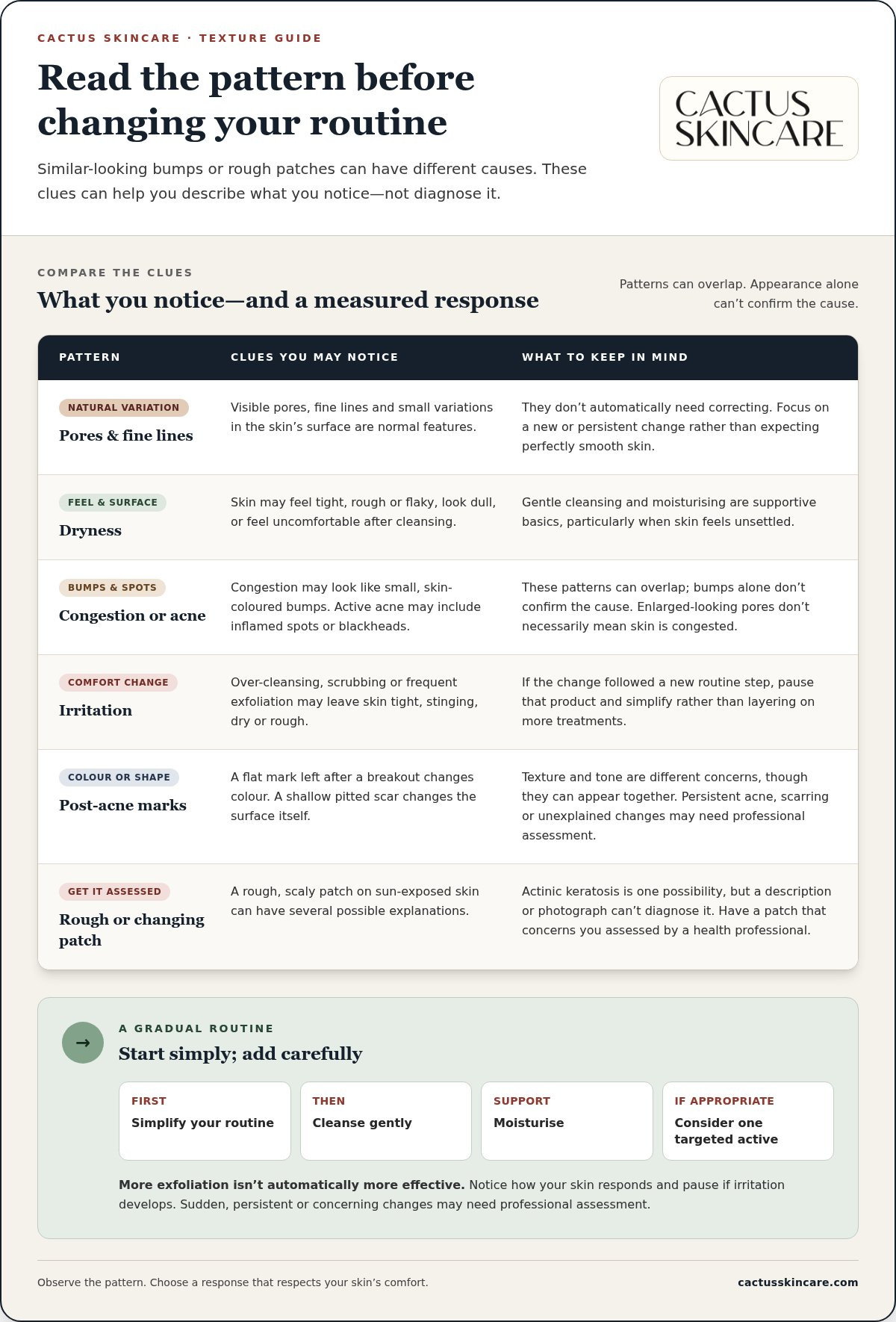
You may notice roughness while washing your face, small bumps that catch the light, flaky areas or shallow depressions left after a breakout. Sometimes you’ll feel a change before you see it. Several patterns can appear at once, and each may have a different cause, so appearance alone can’t confirm what’s happening. Visible pores and natural variation don’t, by themselves, require correction.
Notice where the change appears and whether it’s new, persistent or uncomfortable. A rough, scaly patch on sun-exposed skin, for example, can have several possible explanations. Actinic keratosis is one sun-damage-related possibility, but a description or photograph can’t diagnose it. Have a health professional assess any patch that concerns you.
Is uneven skin texture the same as uneven skin tone?
No. Texture is about how the surface feels or its shape; tone is about colour. A flat brown mark left after a breakout may look uneven in colour but feel smooth. A colourless bump, on the other hand, may be noticeable by touch without changing the skin’s tone.
The two can overlap: a spot may be both raised and discoloured. While this guide focuses primarily on texture, educational skincare resources from brands like VENSIA explore approaches for managing distinct tone and pigment variations. Separating what you feel from what you see can help you describe the concern clearly and avoid choosing an approach aimed at the wrong issue.
What Causes Uneven Skin Texture? Match the Pattern to the Possibility
A similar-looking bump or rough patch can have more than one explanation. Dryness, clogged pores, acne and irritation may all affect the skin’s surface, but they don’t call for the same response. Treat these patterns as clues, not a diagnosis. How the area feels, where it appears and how it changes over time can help guide your next step.
Could dryness, congestion or acne be behind the texture?
Dry or dehydrated-feeling skin may seem tight, rough or flaky, particularly if it looks dull or feels uncomfortable after cleansing. Congestion can appear as small, skin-coloured bumps, while active acne may include inflamed spots or blackheads. These patterns can overlap, so bumps alone don’t confirm the cause.
Enlarged-looking pores are another distinct feature. Their visibility can vary across the face and doesn’t necessarily mean skin is congested. Post-acne marks can also be mistaken for texture: a flat mark changes colour, while a shallow pitted scar changes the surface itself. Identifying which feature you’re noticing helps you avoid choosing an approach for a different concern.
Can irritation or sun exposure affect how skin looks?
Yes. Over-cleansing, scrubbing or using exfoliating products too often may leave skin feeling tight, stinging, dry or rough. Irritation can make the surface look less even, and adding more active products in response may intensify discomfort. If a routine change came before the problem, pause the new product and simplify your skincare instead of layering on more treatments.
Sun exposure can contribute to visible skin changes, but it doesn’t explain every rough or uneven area. A new, persistent or changing patch, or texture accompanied by ongoing discomfort, deserves assessment by an appropriate health professional. A professional can help determine whether it’s a routine concern or needs a different response. The American Board of Cosmetic Surgery outlines different professional skin resurfacing treatments; suitability depends on the individual concern and requires professional guidance.
Cause first, routine second: observe the pattern before choosing an active. More exfoliation won’t resolve every kind of texture. Gentle cleansing and moisturising can support everyday care without promising to treat a specific cause. Cactus Skincare offers cleansing and moisturising options for routine basics.
Uneven Skin Texture Treatments: What Helps, and What Can Backfire?
The right approach depends on what may be causing the texture and how comfortable your skin feels. Gentle cleansing and moisturising are supportive basics, particularly if your skin feels unsettled. Exfoliating products may suit some concerns, while persistent acne, scarring or unexplained changes may need professional assessment. No single active ingredient is a universal solution.
More intensity doesn’t guarantee a better result. Using several new actives at once, exfoliating too often or scrubbing harder can make it difficult to identify what’s helping and may leave skin sore or increasingly rough. A measured approach makes it easier to notice how your skin responds.
Should you exfoliate uneven skin texture?
Chemical exfoliants, such as products formulated with exfoliating acids, help loosen built-up surface cells. Physical exfoliants use particles or tools to create friction and lift surface debris. Either type can irritate some skin, especially if used too frequently or when skin is already uncomfortable. Follow the product label, introduce one exfoliant at a time and avoid combining it with several new actives.
If you develop persistent irritation, pain or unusual sensitivity, pause exfoliation rather than pushing through. Stinging, redness or tightness are cues to step back, not signs that a product is working harder. If symptoms don’t settle, seek advice from an appropriate health professional.
When is a simple routine better than more active ingredients?
Keep things simple when skin feels unsettled. Use a gentle cleanser and a moisturiser that feels comfortable, and hold off on adding treatment products until the irritation has eased. Consistent basic care can support the skin, but it isn’t a guaranteed fix for every cause of texture. For those looking for gentle formulas focused on calming hydration and barrier care, retailers like Puur Skincare Canada curate selections of natural and Korean skincare designed to comfort delicate complexions.
Retinoids, exfoliating acids and other active ingredients may be appropriate in some routines, but suitability depends on the concern and the individual. Layering them without a clear plan can increase irritation, and an active aimed at one issue may not address another. If you’re unsure how to fix uneven skin texture, start by simplifying and observing rather than introducing several products together.
For ongoing acne, scarring or a change you can’t explain, a health professional can help assess what’s behind it and discuss suitable options. In-clinic procedures and prescription treatments require professional guidance; they aren’t substitutes for identifying the concern first. The right choice fits the cause and your skin’s tolerance, not necessarily the strongest treatment.
How to Fix Uneven Skin Texture with a Gradual Daily Routine
A steady routine is easier to assess than a shelf full of new products. If your skin feels unsettled, simplify: pause recently added actives that seem to irritate, then focus on gentle cleansing and moisturising. Once your skin feels comfortable, consider one targeted active if it suits the concern. This gradual sequence helps you notice how your skin responds instead of guessing which product caused a change.
What is a gentle morning and evening routine for rough skin?
Your routine should suit your skin, not follow a rigid template. In the morning, cleanse gently if needed, apply a comfortable moisturiser and use suitable sun protection. Australia’s sun exposure makes daily protection an important consideration; follow current Australian sunscreen guidance and the directions on your chosen sunscreen.
In the evening, gently remove sunscreen, makeup and daily build-up, then moisturise. If cleansing leaves your skin tight or uncomfortable, review whether the product or frequency feels too harsh. Aim for a routine you can maintain, not a sequence of steps that leaves skin feeling stripped.
How should you introduce a new exfoliant or serum?
Wait until your basic routine feels comfortable before introducing a new exfoliant or serum. Add one product at a time and follow its directions, rather than starting several actives together. A cautious patch test, following the product’s instructions, may help you observe how a small area responds, but it can’t guarantee that irritation won’t occur later.
Track comfort as well as appearance. Note persistent stinging, redness, dryness or increased sensitivity, and pause the new product if irritation continues. If symptoms are painful, don’t settle or raise concern, seek advice from an appropriate health professional.
Consistency matters, but visible change isn’t instant or uniform. What you notice depends on the cause, the product and your individual skin; some concerns may need assessment rather than a cosmetic routine. Give your skin time to respond, and don’t increase use simply because results aren’t immediate. A comfortable routine is a useful foundation, not a promise of perfectly smooth skin.
For a simple routine, consider a cleanser such as the Lemon Myrtle cleanser alongside a moisturiser such as Intense Hydrating Crème or Light Balancing Crème. Choose according to what feels suitable for your skin. Explore Cactus Skincare’s cleansing and moisturising products for options to consider in your daily routine.
Build a Consistent Texture-Supporting Routine with Cactus Skincare
A considered routine is built through repeatable steps, not a crowded bathroom shelf. Aim for skin that feels comfortable and cared for, not a flawless or poreless finish. Gentle cleansing and moisturising can support everyday skincare, but they can’t guarantee a change in texture or address every underlying cause.
Which skincare basics can support a steady routine?
Choose a cleanser that leaves your skin feeling comfortable, then follow with a moisturiser that suits your preferences. Cactus Skincare’s Lemon Myrtle cleanser is an option for cleansing; Intense Hydrating Crème and Light Balancing Crème are moisturising options. Introduce products thoughtfully and follow their directions, especially if your skin is already unsettled.
Keep the routine uncomplicated long enough to notice how your skin responds. You don’t need to add every product category or use an active ingredient simply because texture is your concern. Cactus Skincare’s facial products are manufactured in Australia. Refer to current product information for ingredients and directions before use.
Consistency can make a routine easier to follow and evaluate. If a step repeatedly leaves your skin uncomfortable, pause and reassess rather than persevering in pursuit of a perfectly smooth look. Pores and natural variation remain part of skin.
When should you seek professional advice about texture?
Arrange an assessment with an appropriate health professional if a skin change is sudden, persistent, painful or worsening, or if you’re unsure what you’re seeing. Skincare products can support a routine, but they can’t diagnose a condition or replace medical assessment or treatment. A professional can help clarify what may be contributing to the change and whether another approach is needed.
Knowing how to fix uneven skin texture starts with care that respects your skin’s comfort and natural variation. Keep the essentials manageable, make changes gradually and seek guidance for concerns that don’t settle.
Explore Cactus Skincare’s Australian-made facial care and choose a cleansing or moisturising step for your routine.
Make Your Next Skincare Step a Gentle One
Understanding how to fix uneven skin texture begins with noticing what you feel and see, then considering possible causes before choosing a response. Dryness, congestion and irritation can look alike, so stronger exfoliation isn’t automatically the answer. A simple, comfortable routine and one gradual change at a time can help you observe how your skin responds.
Visible pores and natural variations aren’t defects to eliminate. If a change is sudden, persistent, painful or worsening, seek assessment from an appropriate health professional. Skincare can support daily care, but it can’t diagnose a concern.
Cactus Skincare’s Australian-made facial range includes cleansers, crèmes, serums, facial oils and masks, with options for everyday cleansing and moisturising. Choose products according to your routine and their current product information, without expecting a particular texture result. Explore Cactus Skincare’s Australian-made facial care and choose a manageable next step for your routine.
Frequently Asked Questions
How long does it take to improve uneven skin texture?
There’s no set timeframe for improvement because it depends on the cause, the approach and your individual skin. Dryness-related roughness may respond differently from acne marks or scarring, which may need professional advice. Keep a simple routine consistent and introduce changes gradually so you can assess your skin’s response. If the texture persists, worsens or causes concern, seek an assessment rather than continually adding products.
Can exfoliating fix uneven skin texture?
Exfoliating may help with some surface concerns, but it won’t address every cause of uneven texture. Chemical exfoliants loosen surface build-up, while physical scrubs use friction. Either can irritate skin if used too often or when skin is already uncomfortable. Follow product directions, introduce one exfoliant at a time and pause if you develop persistent stinging, pain, redness or unusual sensitivity.
Is uneven skin texture normal?
Yes, some variation in skin texture is normal. Pores, fine lines and small differences in the skin’s surface are natural features, not defects that need to be removed. Consider whether you’re noticing a new or persistent change, rather than expecting perfectly smooth or poreless skin. If a change is sudden, painful, worsening or concerning, an appropriate health professional can assess it.
What causes bumpy or rough skin on the face?
Bumpy or rough-feeling skin can have several possible causes, including dryness, clogged-looking pores, acne or irritation. Over-cleansing or frequent exfoliation may also leave skin uncomfortable and rough. Post-acne marks can be flat colour changes or shallow scars that affect the skin’s surface. Similar patterns can have different origins, so appearance alone can’t confirm the cause or identify the right treatment.
Should I use retinol for uneven skin texture?
Retinol may suit some skin concerns, but it isn’t a universal answer to uneven texture. It can cause irritation, particularly if introduced alongside other active ingredients or used on already uncomfortable skin. If you’re considering it, introduce one product at a time and follow its directions. For persistent acne, scarring, unexplained changes or uncertainty about suitability, seek guidance from an appropriate health professional.
Can dehydration make skin texture look uneven?
Yes, skin that feels dry or dehydrated may look dull, flaky or rough, making its surface seem less even. This is only one possibility, and similar signs can have other causes. A moisturiser that feels comfortable may support your routine, but hydration isn’t a guaranteed fix for bumps, acne or scarring. If roughness persists or worsens, consider professional assessment.
When should I see a dermatologist about uneven skin texture?
See a dermatologist or another appropriate health professional if a skin change is sudden, persistent, painful, worsening or unexplained. Also seek assessment for ongoing acne, scarring or a new rough, scaly patch, particularly on sun-exposed skin. Skincare products can’t diagnose a condition or replace medical care. A professional can assess the change and advise whether it needs treatment beyond a cosmetic routine.