
Australian Botanical Skincare: How to Choose a Formula That Suits Your Skin
What does “botanical” tell you about a skincare formula? Australian botanical skincare can feature plant-derived ingredients, but the label alone won’t explain how the full formula is designed, what it’s intended to do or whether it will suit your skin.
It’s understandable to be drawn to products described as natural or gentle. But those terms can make products harder to compare, and a botanical ingredient isn’t automatically effective or irritation-free. Australian-made skincare may also matter to you, but local manufacture alone doesn’t guarantee a particular result.
This guide will help you look beyond the front label. Learn what botanical skincare means, how to assess ingredient information and product claims, and how to match a facial skincare format to your preferences. The aim is to choose thoughtfully, with a clear understanding of what a product is designed to do.
Key Takeaways
- Australian botanical skincare may refer to a product’s ingredients, where it’s made or how it’s positioned. These claims describe different things.
- Look beyond a featured plant ingredient. Consider the full formula, stated purpose and directions for use.
- Compare products by format, intended use and your preferences, rather than relying on broad claims alone.
- Assess Australian-made claims separately from ingredient sourcing and formulation details.
- Serums, cleansers, crèmes, facial oils and masks have different formats and directions to consider when building a routine.
What Does Australian Botanical Skincare Mean for Your Face?
Botanical skincare is skincare formulated with ingredients derived from plants. That definition describes a broad approach to formulation, not a promise about how a product will perform or feel. Plant-derived ingredients can feature in products with different textures, purposes and ingredient profiles.
The phrase Australian botanical skincare can refer to several things: a product made in Australia, a formula containing plants sourced from Australia, or brand positioning that emphasises botanical ingredients. These ideas can overlap, but they aren’t interchangeable. A product may be made locally while using ingredients from elsewhere, or feature Australian-sourced botanicals without being made here. Look for a clear explanation of each claim instead of treating “Australian” as an all-purpose description.
Botanical ingredients and Australian plant ingredients are not the same thing
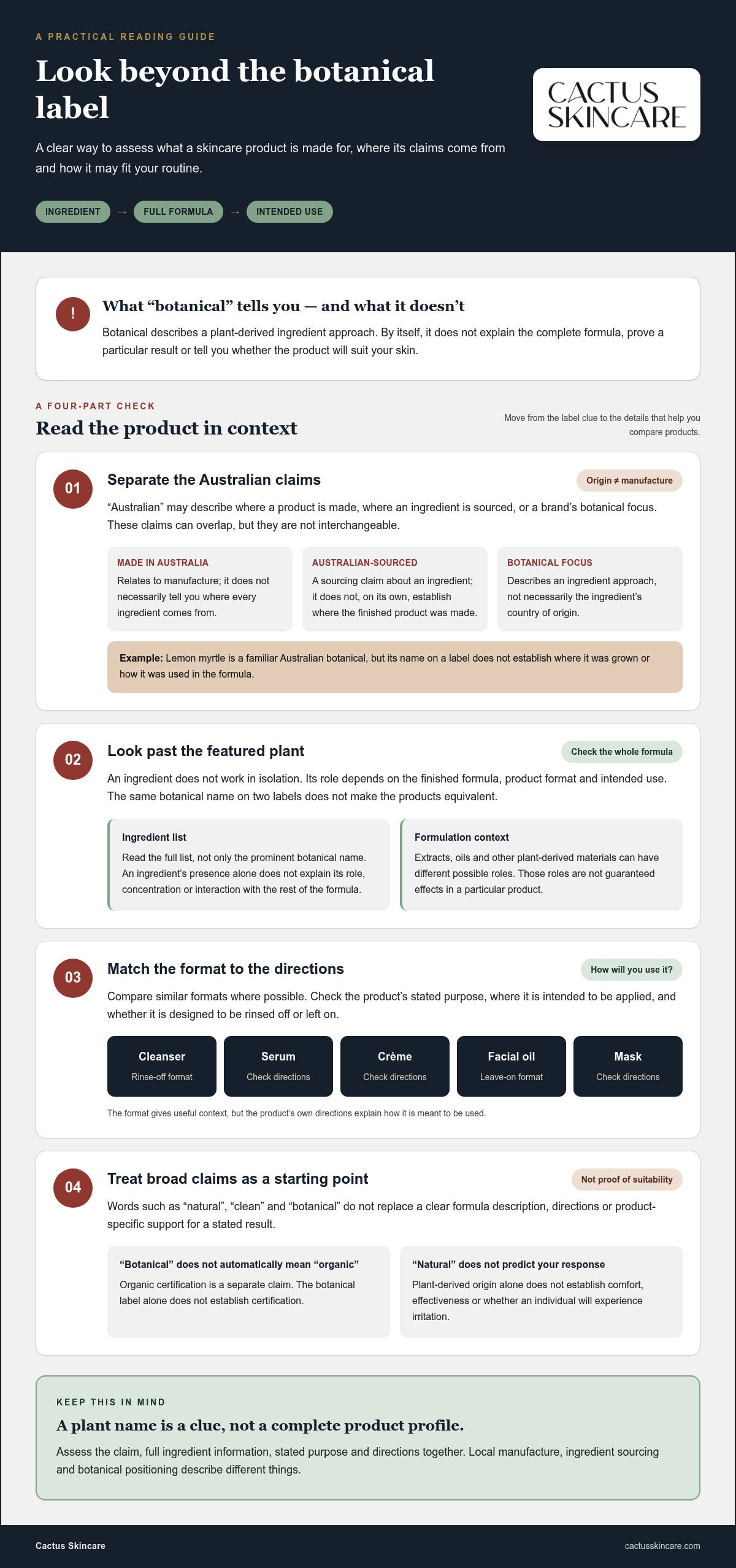
“Botanical” describes an ingredient’s plant-derived origin, not its country of origin. Botanical ingredients may come from many places, and the term alone doesn’t tell you where a plant was grown, processed or sourced. Lemon myrtle is a familiar Australian botanical, but its name on a label or in a product title doesn’t establish where the ingredient was grown or how it was used in the formula.
Likewise, “Australian-made” relates to manufacture, not necessarily to the origin of every ingredient. Keep these details separate as you compare products. Product information should distinguish whether a claim concerns the finished product’s manufacture, an ingredient’s sourcing or the formula’s botanical focus.
What the botanical label can and cannot tell you
A botanical label offers a broad clue about a product’s ingredient approach. It doesn’t provide a complete formula profile, establish that the product will suit your skin or prove a particular result. Nor does “botanical” automatically mean “organic”. Organic certification is a separate claim, and the botanical label alone doesn’t establish that a product or its ingredients are certified.
Plant-derived origin also can’t predict how an individual will respond. Skin preferences and tolerances differ, and an ingredient’s presence doesn’t explain its role, concentration or interaction with the rest of the formula. “Natural” isn’t a reliable shortcut for judging comfort or effectiveness. Equally, the word doesn’t establish that a product will irritate you.
Read the product description, ingredient information and directions together. Consider the intended use and complete formula, not only the featured botanical or a broad front-label claim. Treat marketing language as a starting point, not proof of suitability or performance. This gives you a more grounded basis for choosing what to explore.
How Botanical Skincare Formulas Turn Ingredients into a Finished Product
A plant-derived ingredient doesn’t work in isolation. Its role depends on how it’s incorporated into the complete formula, the product format and its intended use. An extract in a cleanser, for example, is part of a product designed to be applied and rinsed off. An oil in a facial oil is part of a leave-on format. The ingredient name alone can’t explain the purpose or experience of either finished product.
Ingredient origin alone does not establish how a finished skincare product will perform. Formulation brings ingredients together in forms and proportions selected for a product’s intended use. That’s why the full ingredient list and directions offer more useful context than a prominent botanical name on the front of the pack.
Why a botanical ingredient needs formulation context
Plant-derived ingredients can include extracts, oils and other materials, and may serve different functions in cosmetic formulations. An oil may contribute to a formula’s texture, while an extract may be included as one part of a broader blend. These are possible formulation roles, not guaranteed effects in a particular product. Without reliable evidence about the finished formula, don’t assume a named plant delivers a specific skin benefit.
Consider the product as a whole. Its other ingredients, texture and whether it’s designed to be rinsed off or left on all affect how it fits into a routine. The same botanical name on two labels doesn’t make the products equivalent. Their formats and intended uses may differ.
Read product information without relying on a single headline claim
Use the product’s stated purpose, format and directions as a set. A cleanser is used differently from a crème, serum or facial oil, so compare similar formats where possible. Check whether the directions describe a rinse-off or leave-on product, where it’s intended to be applied and how it’s meant to be used. These details help you assess whether it suits your preferences and routine.
Words such as natural, clean and botanical can signal a brand’s approach, but they don’t replace a clear description of the formula or its intended purpose. Read claims alongside the ingredient information and instructions. If a headline suggests a particular result, look for product-specific support rather than treating the wording as proof.
A measured way to assess Australian botanical skincare is to move from the featured ingredient to the full formula, then from the formula to the product’s intended use. This keeps the focus on useful information rather than assumptions based on a plant name or a single label term.
For a practical example of different formats, Cactus Skincare’s Australian-made facial range includes serums, crèmes, cleansers and facial oils.
How to Compare Australian Botanical Skincare for Your Skin Needs
Compare products by what they’re designed to do and how you’ll use them, not simply by the botanical named on the label. A product’s format helps describe its place in a routine; ingredient-origin claims describe where ingredients come from. They answer different questions.
Start with the role you want a product to play, then consider its stated purpose, texture and directions. Use the table to make an initial comparison. These format-based prompts aren’t universal recommendations; your preferences and skin’s responses should guide your choice.
| Format | What to compare | Questions to ask yourself |
|---|---|---|
| Cleanser | Stated cleansing purpose and whether directions say to rinse | Do I prefer this format and its specified method of use? |
| Serum | The purpose described for the product and where it fits in the routine | Does that purpose align with what I’m looking for? |
| Crème | Stated use, texture and application directions | Would I find this texture comfortable to use? |
| Facial oil | Its described role and instructions for application | Does an oil format suit my preferences? |
| Mask | Its stated purpose and how often the directions say to use it | Does the suggested use fit my routine? |
Match the product format to the role you want it to play
A cleanser, serum, crème, facial oil and mask are different formats, each with its own stated purpose and directions. Don’t assume one format is automatically better for a particular skin type, or that products in the same format are interchangeable. Read what each product says it’s for, then check how it’s meant to be applied.
Cactus Skincare’s Lemon Myrtle cleanser and Matcha detox mask illustrate two distinct formats in the range. Their names alone don’t establish how they’ll feel on your skin or what results to expect. Use the relevant product information and directions to assess their intended use. A Cleansing Balm is another format to compare by its instructions and stated role in your routine.
Consider comfort, preferences and the information available
Your skin’s needs and tolerances are individual. Think about textures you enjoy, products you’ve found comfortable and any ingredients you already know you prefer to avoid. Botanical ingredients can still be unsuitable for some people, so plant-derived doesn’t mean universally comfortable. This is about making a considered choice based on your experience and the product information, not diagnosing a skin condition.
Before introducing something new, review its ingredient information, stated purpose and directions together. Follow the instructions and pay attention to how the product feels as you use it. Don’t let a prominent botanical claim fill in gaps if the available information doesn’t clearly explain the intended use.
To compare Australian botanical skincare more meaningfully, assess the format and directions alongside your preferences, and treat origin claims as a separate consideration.
A Practical Checklist for Choosing Botanical Skincare in Australia
A considered choice starts with what you want a product to do, not how persuasive its front label sounds. Use this checklist to move from your preferences to a product you can assess with care. It keeps the focus on practical details instead of turning a botanical claim into a promise.
- 1. Identify the need. Decide what role you want a product to play in your facial skincare, such as cleansing or moisturising. Keep your aim specific and realistic.
- 2. Choose a format. Narrow your options to a cleanser, serum, crème, facial oil or mask based on your preferences and the product’s intended use.
- 3. Inspect the information. Read the stated purpose, directions and ingredient details as separate parts of the product description. Look for information that explains how it’s meant to be used.
- 4. Introduce it thoughtfully. Follow the directions and add one new product at a time. This makes it easier to notice how your skin responds, without relying on assumptions based on a botanical name.
Assess claims about Australian manufacture separately from claims about ingredient sourcing or how a formula is made. These describe different things. Australian-made doesn’t automatically mean a product is organic, sustainable, gentler or more effective; each claim needs its own context and support. Clear, specific information is more useful than a cluster of appealing labels.
A simple label and product-page review
Focus on three details: the product’s stated purpose, its directions and its ingredient information. Each answers a different question. The purpose describes the intended role, directions explain how to use it, and ingredient information helps you understand what the formula contains. A botanical name alone can’t establish a specific result.
For a fair comparison, compare products in the same format and with a similar intended role, then consider their stated use and instructions. This gives you a more useful basis for choosing than comparing a mask with a cleanser simply because both use botanical language.
Introduce a new product with care
Once you’ve selected a product, follow its directions and introduce one new item at a time. This measured approach helps you observe your experience without changing several parts of your skincare selection at once. If irritation occurs, discontinue use. For persistent concerns, seek advice from a qualified health professional.
For a considered Australian botanical skincare choice, let clear product information guide you from selection to use. Explore Cactus Skincare’s Australian-made facial skincare and compare the formats with your preferences and intended use.
Explore Australian-Made Botanical Facial Skincare from Cactus Skincare
Once you know how to assess a formula, Australian-made facial skincare offers a practical context for applying that approach. Cactus Skincare is an Australian-owned brand, and its topical facial skincare is manufactured in Australia. Local manufacture is useful context, but it doesn’t establish ingredient origin, organic status or how a product will suit your skin. Consider the product information, stated purpose and your own preferences.
A focused range for facial skincare
The Cactus Skincare range includes serums, crèmes, cleansers and facial oils, as well as a Matcha detox mask and the Prep pack. These formats offer different ways to explore facial skincare. The Protective day serum, Regenerative night serum and Intense Hydrating Crème are specific products in the range. Their names identify them, while their descriptions and directions provide context for deciding whether they fit your needs.
Rather than choosing by name alone, compare products by the role you want them to play. For a serum, crème or cleanser, read its stated purpose and intended use. For a facial oil or mask, consider the product information and directions in the same way. A format can help narrow your options, but it can’t tell you whether a particular formula suits everyone.
The range is sold directly to consumers online, where you can review product information as part of your selection. Keep Australian manufacture distinct from ingredient-sourcing and formulation claims. One describes where the product is made; the others concern different aspects of its composition or positioning. Clear distinctions make for more confident choices.
Choose your next step with confidence
Bring the decision back to three details: the product’s stated purpose, its format and its ingredient information. Then consider the textures you prefer and how you typically respond to skincare. You don’t need to select a whole new routine at once. Choosing a product that aligns with a particular need can be a considered next step. Follow its directions and introduce it thoughtfully.
There’s no single formula that suits everyone. A botanical description or Australian-made origin can be part of your decision, but neither replaces the details that help you assess a finished product. Take time to compare those details and choose at your own pace.
To explore the range, browse Cactus Skincare’s facial skincare and review the available formats and product information.
Make Your Next Skincare Choice With Confidence
Choosing Australian botanical skincare doesn’t need to begin with a promise of transformation. Start with a clear purpose, read the product information and give yourself space to consider how the format fits your preferences. A thoughtful choice is one you can make with understanding, without pressure to follow a trend or collect more products.
Cactus Skincare offers an Australian-made facial range, including the Lemon Myrtle cleanser and Matcha detox mask. These are distinct formats to consider when deciding what role you want a product to play. Their names are a starting point; the product information can help you make a more informed choice.
Take a calm look through the range and decide what feels relevant to your needs. Explore Cactus Skincare’s Australian-made facial range. A considered routine begins with one confident choice.
Frequently Asked Questions
What is Australian botanical skincare?
Australian botanical skincare describes facial products associated with plant-derived ingredients and an Australian connection, such as local manufacture, ingredient sourcing or brand positioning. The wording can refer to different things, so look at what the product information specifies. A description may identify a product as made in Australia without stating where its plant ingredients were grown. Read the claim alongside the product’s stated use and ingredient details.
Are Australian botanical skincare products suitable for sensitive skin?
Not necessarily. “Botanical” doesn’t indicate how every individual will respond, and people can react differently to the same product. If your skin is easily unsettled, review the ingredient information and directions before use, and avoid introducing several unfamiliar products at once. Stop using a product if irritation occurs. If symptoms persist or concern you, seek advice from a qualified health professional rather than trying to identify the cause yourself.
Are botanical skincare products better than synthetic skincare?
Neither botanical nor synthetic products are automatically better. An ingredient’s origin doesn’t, by itself, establish the quality or performance of the finished product. For a balanced comparison, consider products intended for a similar purpose and review their ingredient information, directions and claims. Look for support for a promised benefit rather than treating “natural” or “synthetic” as a shortcut for judging safety, suitability or effectiveness.
What are examples of Australian botanical skincare ingredients?
Lemon myrtle is a recognisable Australian botanical name, while botanical ingredients more broadly can come from plants grown in many parts of the world. Seeing a plant name on a product doesn’t establish its source or explain its role in the formula. If Australian provenance matters to you, look for a clear statement about where the ingredient was grown or sourced rather than inferring this from the product’s name.
Does Australian-made skincare mean the ingredients are Australian-grown?
No. “Australian-made” refers to where the finished product is manufactured; it doesn’t necessarily identify where individual ingredients come from. A product made in Australia may use ingredients sourced from elsewhere. If you’re comparing products for local ingredient provenance, look for a specific sourcing statement and note what it applies to. A manufacturing claim and an ingredient-origin claim describe separate parts of a product’s story.
Can botanical skincare cause irritation?
Yes. Plant-derived ingredients can be unsuitable for some people, just as other skincare ingredients can, and “natural” wording doesn’t guarantee a gentle response. Follow the product’s directions and stop using it if irritation develops. If you’re trying to understand a reaction, note which product you used and when you began using it, but don’t assume you can diagnose its cause. Seek qualified health advice if symptoms are severe, persistent or worrying.
How do I choose a botanical skincare product for my routine?
Start by identifying a role you want a product to fill, such as cleansing or adding a moisturising step, then consider which format suits your habits. Before buying, check that the product’s directions fit how you intend to use it and that you understand the information provided. If you already use a similar product, consider whether you need another one. Introduce a new choice thoughtfully and observe your response.