

How to Repair a Damaged Skin Barrier
Table of Contents
- Signs of a Damaged Skin Barrier
- What Causes a Damaged Skin Barrier
- Skin Barrier Repair Ingredients That Actually Work
- How to Repair a Damaged Skin Barrier: A Step-by-Step Routine
- How Long Does It Take to Heal a Skin Barrier
- Barrier Repair for Specific Skin Types and Situations
- Slugging and Skin Cycling: Do They Actually Help?
- Conclusion
Last Updated: August 23, 2026
Your skin is telling you something is wrong. It stings when you apply products that never bothered you before. It looks dull, feels tight, and no amount of moisturiser seems to help. These are the hallmarks of a damaged skin barrier. At Cactus Skincare, we work with this exact issue every day, formulating for skin that has been pushed past its limits by aggressive actives, environmental stress, or simply the wrong routine. Below, we break down exactly what is happening in your skin, which ingredients genuinely repair it, and the step-by-step process to restore function without making things worse.
The skin barrier, technically known as the stratum corneum, is the outermost layer of the epidermis. Its job is to keep moisture in and irritants out. When it is intact, skin feels comfortable and tolerates most products without complaint. When it is compromised, everything changes.
Signs of a Damaged Skin Barrier
A compromised moisture barrier rarely announces itself with a single symptom. More often, it shows up as a cluster of changes that seem unrelated until you understand what is driving them.
Physical symptoms to watch for
The most common signs of a damaged skin barrier include:
- Persistent tightness that does not resolve after moisturising
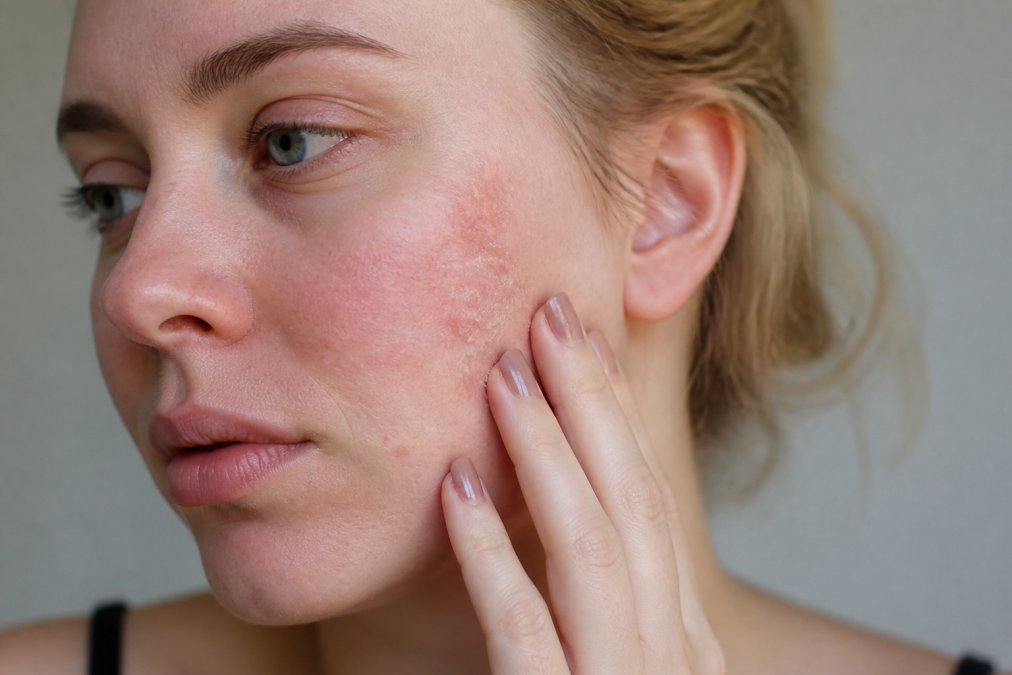
- Flaking or peeling, particularly around the nose, cheeks, and forehead
- Redness and visible inflammation that appears without an obvious trigger
- Stinging or burning when applying serums, toners, or even water
- Sudden sensitivity to products you have used for months without issue
- Breakouts in unusual locations, especially small, clustered spots that do not behave like typical hormonal acne
Increased transepidermal water loss drives most of these symptoms. When the lipid-rich matrix of the stratum corneum is disrupted, water escapes the skin far more rapidly than it should, leaving skin dehydrated even when you are applying plenty of product.
How compromised skin behaves differently
Healthy skin has a slightly acidic pH balance, typically between 4.5 and 5.5. This acidity supports the skin's microbiome, keeps enzyme activity regulated, and maintains the structural integrity of the barrier. When the barrier is damaged, the skin's pH often rises, disrupting the microbiome and triggering inflammation.
Compromised skin often looks oily on the surface while being severely dehydrated underneath. The skin overproduces sebum as a compensatory response, which leads many people to reach for stripping cleansers or more exfoliation, making the problem significantly worse.
What Causes a Damaged Skin Barrier
Barrier damage rarely has a single cause. Most cases involve a combination of factors that compound over time.
Over-exfoliation and aggressive actives
This is the most common cause we see. The widespread popularity of chemical exfoliants, retinoids, and high-concentration vitamin C has led many people to build routines that would challenge even resilient skin. Using multiple acids, layering retinol with exfoliating toners, or reaching for stronger percentages before the skin has adapted are reliable paths to barrier breakdown.
Retinoids deserve particular mention. They are genuinely effective for skin renewal, but they increase cell turnover at a rate that can outpace the skin's ability to maintain its lipid structure. According to research published by the National Library of Medicine, disruption of the skin's lipid composition is a primary driver of barrier dysfunction, with ceramide depletion playing a central role in the loss of barrier integrity.
Environmental and lifestyle factors
Environmental aggressors are underestimated contributors to barrier damage. UV exposure degrades structural lipids and accelerates transepidermal water loss. Air conditioning and low-humidity environments draw moisture from the skin continuously. Hard water can disrupt the skin's pH balance with regular exposure.
Lifestyle factors matter significantly. Poor sleep impairs skin repair processes that occur predominantly overnight. A diet low in essential fatty acids leaves the skin without the raw materials it needs to rebuild its lipid-rich structure. Chronic stress elevates cortisol, which has a measurable negative effect on skin barrier function.
Skin Barrier Repair Ingredients That Actually Work
Not all moisturising ingredients repair the barrier. Some simply sit on top and mask the problem. Understanding the difference is the most practical thing you can do for your skin.
Ceramides, fatty acids, and cholesterol
Ceramides are the most important ingredient category for genuine barrier repair. They are the primary lipid component of the stratum corneum, forming the "mortar" between skin cells. Topical ceramides have strong evidence for restoring barrier function, particularly when combined with fatty acids and cholesterol in a ratio that mirrors the skin's own composition.
As documented in dermatology research via the Australasian College of Dermatologists, the skin's lipid matrix consists of roughly equal parts ceramides, fatty acids, and cholesterol. Products that replicate this ratio produce better outcomes than those relying on a single lipid type.
Fatty acids, particularly linoleic acid, are often deficient in acne-prone skin. Supplementing topically can help normalise sebum composition and support barrier integrity without triggering breakouts.
Humectants, emollients, and occlusives
These three categories work together and are most effective when layered in the correct order.
Humectants draw water into the skin. Hyaluronic acid is the most widely used, but glycerin and panthenol are equally effective and often better tolerated on sensitised skin. Apply humectants to damp skin for best results.
Emollients fill the gaps between skin cells, improving texture and softness. Ingredients like squalane, shea butter, and plant-derived oils function as emollients and support barrier function by supplementing the skin's natural lipid content.
Occlusives form a physical seal over the skin to prevent transepidermal water loss. Petrolatum is the most effective occlusive known, but plant-based alternatives like plant waxes provide meaningful occlusion for those who prefer non-petroleum options.
Ingredient Type |
Role |
Examples |
Best Applied |
|---|---|---|---|
Humectants |
Draw water into skin |
Hyaluronic acid, glycerin, panthenol |
To damp skin, first step |
Emollients |
Fill gaps between cells |
Squalane, plant oils, shea butter |
After humectants |
Occlusives |
Seal moisture in |
Petrolatum, plant waxes, beeswax |
Final step, on top |
Ceramides |
Rebuild lipid matrix |
Ceramide NP, AP, EOP |
Any step, ideally with fatty acids |
Bioactives that go beyond basic moisturising
Ectoin, derived from extremophile bacteria, has well-documented protective effects on skin cells under environmental stress and is particularly useful for sensitised or reactive skin. Niacinamide strengthens the barrier by stimulating ceramide synthesis and reducing transepidermal water loss. Bakuchiol, a plant-derived retinol alternative, supports skin renewal without the barrier disruption associated with retinoids. Prickly pear extracts, oils and ingredients such as AquaCacteen™ across the range as part of our wider approach to hydration, soothing and skin resilience.
How to Repair a Damaged Skin Barrier: A Step-by-Step Routine
Repairing a damaged skin barrier requires a deliberate, phased approach. The instinct to add more products is usually wrong. The answer is almost always less.
Step 1: Strip the routine back to essentials
For the first one to two weeks, use only three products: a gentle cleanser, a moisturiser with ceramides and humectants, and a broad-spectrum sunscreen. Nothing else.
Remove all exfoliants, retinoids, vitamin C, AHAs, BHAs, and any product with alcohol high in the ingredient list. This reset period allows the skin's inflammatory response to calm and gives the barrier the conditions it needs to begin rebuilding.
Choose a gentle, pH-balanced, fragrance-free cleanser. Cleansing is often where additional damage occurs, particularly if the cleanser strips the skin's natural lipids.
Step 2: Rebuild with barrier-supportive products
Once redness and stinging have subsided, typically within one to two weeks, introduce a dedicated barrier-repair serum or treatment. Look for ceramides, fatty acids, hyaluronic acid, niacinamide, and ectoin on the ingredient list.
Apply in the correct order: humectant serum on damp skin, emollient moisturiser on top, then sunscreen in the morning. At night, finish with an occlusive layer if your skin is severely dehydrated.
Consistency matters more than product complexity at this stage. Two to three reliable products used every day will outperform a complicated routine used inconsistently.
Step 3: Reintroduce actives slowly and strategically
Once the skin barrier feels stable, typically three to four weeks into the repair process, you can begin reintroducing actives. Start with the mildest options: low-percentage niacinamide is already in your routine and is non-irritating. Bakuchiol can be introduced next as a gentler alternative to retinol.
If you want to return to retinoids or chemical exfoliants, reintroduce one at a time, once or twice per week maximum, and always follow with barrier-supportive products. Never layer multiple actives on a recovering barrier.
How Long Does It Take to Heal a Skin Barrier
How long it takes to repair a damaged skin barrier depends on the severity of the damage and how consistently you follow a repair-focused routine. Mild barrier disruption can resolve within a week. Moderate damage from sustained over-exfoliation typically takes two to four weeks. Severe or chronic barrier compromise can take six to eight weeks or longer.
The skin barrier regenerates continuously. Your job is to stop the behaviours that are disrupting it faster than it can repair itself, and to provide the raw materials it needs to rebuild effectively.
Barrier Repair for Specific Skin Types and Situations
The general principles of barrier repair apply universally, but the execution varies depending on your specific skin type and circumstances.
Acne-prone and hormonal skin
Acne-prone skin is frequently treated with harsh, stripping products that damage the barrier while attempting to control breakouts. A compromised barrier in acne-prone skin worsens inflammation and can make breakouts more severe and slower to heal.
The priority for acne-prone skin is barrier repair first, active treatment second. Niacinamide is the ideal bridge ingredient: it supports ceramide synthesis, reduces sebum production, and has anti-inflammatory properties that address active breakouts without barrier disruption. Linoleic acid-rich oils can also help normalise sebum composition in a way that reduces comedone formation over time.
Post-procedure and over-exfoliated skin
Skin recovering from professional treatments such as laser resurfacing, chemical peels, or microneedling is in an acute state of barrier compromise. For the first week post-procedure, follow your treating practitioner's specific aftercare protocol. Generally, this means avoiding all actives, using only the gentlest cleansers, and applying barrier-repair products frequently throughout the day. According to guidance from the Australasian Society for Dermatology Research, post-procedure skin care should prioritise wound healing support and minimise additional irritation until the barrier has re-established.
Occlusives are particularly valuable in this phase. Applying a plant wax or petrolatum-based balm over a ceramide moisturiser can significantly reduce discomfort and accelerate visible recovery.
Mature skin in its 40s and 50s
Barrier function naturally declines with age. Ceramide production decreases, lipid composition changes, and transepidermal water loss increases. Mature skin is often in a state of chronic mild barrier compromise even without aggressive product use.
The repair approach for mature skin needs to account for both barrier restoration and the skin renewal goals that are often a priority at this life stage. Bakuchiol offers meaningful skin renewal support without the barrier disruption of retinoids. Peptides support collagen synthesis without irritation. Ectoin provides environmental protection that is particularly relevant as the skin's own antioxidant defences decline with age.
Slugging and Skin Cycling: Do They Actually Help?
Slugging refers to applying a thick occlusive product, typically petrolatum or a similar balm, as the final step in your evening routine. The evidence for its effectiveness in reducing transepidermal water loss is solid. For a compromised barrier, slugging can meaningfully accelerate recovery by preventing overnight moisture loss. Acne-prone skin may experience congestion with heavy occlusives, though lighter plant-based alternatives can provide similar benefits with less risk.
Skin cycling is a structured approach to active use that alternates between exfoliation nights, retinoid nights, and recovery nights. The recovery nights, where only barrier-supportive products are used, are the genuinely valuable innovation. For skin in active repair, skin cycling is not appropriate. Once the barrier is stable, skin cycling provides a sensible framework for reintroducing actives without re-triggering barrier damage.
The broader principle behind both approaches is sound: the skin needs recovery time, and most modern routines do not build it in.
A damaged skin barrier is genuinely uncomfortable to live with, and the amount of conflicting advice online makes it harder to know what to trust. Cactus Skincare was built specifically for this problem: formulas that combine ceramide-supportive bioactives, ectoin, niacinamide, and plant-derived ingredients to repair and strengthen the barrier without adding further stress to sensitised skin. Our approach is barrier-first but not passive, meaning you get genuine skin renewal alongside genuine skin repair. Shop Cactus Skincare and give your skin the conditions it needs to recover properly.
Frequently Asked Questions
What are the signs of a damaged skin barrier?
The most common signs of a damaged skin barrier include persistent redness, tightness after cleansing, flaking or peeling skin, stinging when you apply products, and sudden sensitivity to things that never bothered you before. Your skin may also feel dry despite regular moisturising, or break out in ways that seem unrelated to your usual triggers. These symptoms point to increased transepidermal water loss and a compromised stratum corneum that can no longer regulate moisture effectively.
How long does it take to heal a damaged skin barrier?
Mild barrier damage can show noticeable improvement within two to four weeks when you simplify your routine and use the right barrier-supportive ingredients. More significant damage — from prolonged over-exfoliation, post-procedure recovery, or chronic skin sensitivity — can take six to twelve weeks of consistent care. The key is patience and consistency: stripping the routine back, avoiding irritants, and focusing on ceramides, fatty acids, and humectants like hyaluronic acid while your skin rebuilds its natural lipid matrix.
Which ingredients should I avoid when my skin barrier is damaged?
When your skin barrier is compromised, avoid retinoids, AHAs, BHAs, physical scrubs, alcohol-based toners, and any fragrance-heavy products. These can further disrupt the skin's pH balance, increase inflammation, and worsen transepidermal water loss. Harsh foaming cleansers are also a common culprit. Stick to a gentle cleanser, a fragrance-free moisturiser rich in ceramides and emollients, and a broad-spectrum sunscreen daily. Reintroduce actives only once skin sensitivity has clearly reduced.
Can over-exfoliating cause a damaged skin barrier?
Yes — over-exfoliation is one of the most common causes of a damaged skin barrier. Using AHAs, BHAs, or physical exfoliants too frequently strips the stratum corneum of the lipids it needs to retain moisture and resist irritation. The result is a compromised moisture barrier that feels tight, stings on contact with most products, and becomes prone to redness and inflammation. Dermatologist-recommended guidance is to exfoliate no more than two to three times per week, and to pause entirely when skin is already reactive.
This article was written using GrandRanker